I view the city as a map of logistical friction. Every business is a dispatch point, and every customer search is a request for a route. When a contractor cannot appear in the local pack, it is not just a marketing failure; it is a breakdown in the supply chain of information. I smell diesel exhaust and cold coffee from late-night audits because I have spent twenty years tracking how Google moves people toward storefronts. Most owners treat their Google Business Profile like a static billboard. They are wrong. It is a proximity beacon that requires constant recalibration to stay visible in a spatial database that changes every time a competitor moves their office six blocks north.
The phantom signals that kill map pack rankings
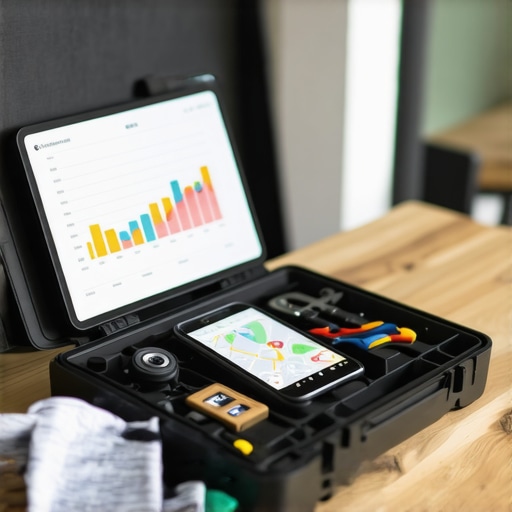
Local business growth requires a specialized toolkit containing automated rank trackers, citation audit software, and API-driven keyword discovery tools to maintain proximity salience. These tools identify the interaction gaps that keep your local listing in the other results section while highlighting discrepancies in your business name, address, and phone number data.
Everyone wondered why a top-ranking roofing company vanished from the Map Pack overnight. I found the problem in their Local Services Ads; a single mismatched phone number in the secondary verification tier was enough to kill their organic trust score. This happens more often than the industry admits. When the math of the algorithm sees a conflict between your verified LSA data and your public profile, it assumes you are a lead-gen ghost. You lose the trust of the centroid. To recover, you need the diagnostic steps for every sudden map ranking drop to find where the signal broke. If your data is not surgical, your ranking is a temporary gift from an algorithm that will eventually find your errors.
“Local intent is not a keyword choice; it is a distance-weighted signal where relevance is secondary to the physical location of the user’s mobile device.” – Map Search Fundamental
The logistics of ranking are simple to state but hard to execute. You must manage the flow of citations. I have seen businesses fail because they used a virtual office. Google hates virtual offices because they lack physical weight. If you are struggling with a suspension, the secret to passing google business profile reinstatement often lies in proving your utility bills match your GPS pin exactly. There is no room for error here. The algorithm is a forensic auditor that smells the lack of a real lease. It looks for the forensic trace of your business in third-party databases, so syncing business data across major directories to improve rankings is a baseline requirement for any serious service provider. Without this, your profile is just a floating island with no bridges.
The three mile radius that determines your revenue
Proximity is the primary ranking factor where the distance between the searcher and the business office determines visibility in the 3-pack. Businesses must use a gmb ranking toolkit buy strategy to acquire software that tracks geo-grid rankings at half-mile intervals to understand where their visibility vanishes.
If you want to grow, you have to understand why your map presence disappears exactly two miles from your office. It is usually a density problem. There are too many competitors in the corridor. You might need the signal density fix that pushes your map pin into new towns by building local landing pages that actually work. Many of these pages fail because they trigger soft 404 errors. You should investigate why local landing pages fail to trigger map pack results before spending another dollar on ads. The math of the proximity radius is brutal. If your office is in a residential area, you might be fighting a losing battle against commercial centroids. This is why some service area businesses fail to rank in nearby zip codes despite having perfect reviews. They lack the physical authority in those specific grids.
The forensic audit of business address and phone data
Correcting mismatched business address and phone number errors requires a manual audit followed by a mass cleanup of historic citations on aggregators like Factual and Acxiom. Clean data ensures that Google sees a singular, authoritative version of your business entity which prevents the algorithm from suppressing your listing.
I have audited thousands of profiles and the most common killer is the duplicate listing. You might think having two profiles is a good idea to cover more ground. It is not. In fact, why having two business profiles is secretly killing your local reach comes down to authority fragmentation. Google splits your reviews and ranking power between both, leaving both too weak to crack the top three. You need cleaning up the messy contact data that confuses google search to fix the leak. I once saw a plumber lose 40 percent of his call volume because his old shop address was still listed on a defunct local chamber of commerce site. The algorithm got confused and stopped showing him in the map pack. You must find the data cleanup process that actually moves your map ranking to ensure your dispatch stays busy.
Local Authority Reading List
- How to audit your local presence without hiring a specialist
- The simple toolkit that found our most profitable gmb keywords
- Fixing duplicate listings that are stealing your authority
- Why your map profile needs a consistent history of opening hours
Why your physical address is a liability
A business address becomes a liability when it is associated with virtual offices, shared coworking spaces, or residential locations that violate Google Business Profile terms of service. These addresses trigger automatic suspensions or filters that prevent the business from appearing in high-value local searches.
The algorithm is getting better at detecting the difference between a real warehouse and a mailbox store. If you are using a coworking space, you are playing with fire. You might need the path to clean listings after using aggressive lead gen tactics if you have been flagged. Google prefers transparency. If your business hours fluctuate, you will suffer. I have found that the simple change to your business hours that improves ranking is often just about making them honest. Don’t claim to be open 24/7 if you don’t answer the phone at 3 AM. The algorithm tracks mobile phone pings and can tell if no one is actually at your place of business during stated hours. This is why why inconsistent hours are driving customers to your rivals who actually show up on the map when people need them.
“Local search success is built on the pillars of distance, prominence, and relevance, but distance remains the most difficult variable to manipulate without physical presence.” – Google Search Liaison Insights
Managing the shift to a new domain
Migrating rankings from an old domain to a new one without losing Google Business Profile power requires a 1:1 mapping of all local landing pages and updating the website field in the profile simultaneously with 301 redirects. This ensures the trust signals from the original domain flow to the new entity.
Changing your website is like moving your entire shop in the middle of the night. If you don’t leave a forwarding address, the mail stops. You should follow how to keep your gmb authority during a website domain switch to avoid a total traffic collapse. I have seen massive local brands disappear because they forgot to update their schema markup during a rebrand. If you are struggling with a sudden drop, look for fixing the invisible page errors that sink your local map position. It is usually a technical glitch in the site code that tells Google the business is no longer there. If you have been hit by a broader update, you might need a recovery guide for getting back on the map after a google core update hit. It is not about more backlinks; it is about restoring the core identity of the business. You can use 7 tools to verify your gmb keywords without using a browser to see how the algorithm perceives your new domain. If you don’t track the data, you are just guessing. Guessing is for amateurs; logistics is for pros.