The Signal Density Fix That Pushes Your Map Pin Into New Towns
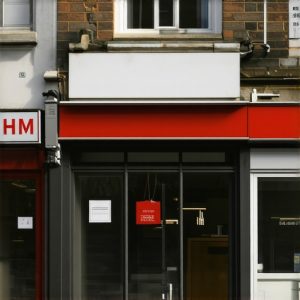
The sidewalk smells like wet concrete and the metallic tang of an approaching storm. I stand across the street from a storefront that technically does not exist. According to the digital cartography of the modern world, this plumbing shop is a powerhouse, yet when I look at the physical brick and mortar, the signage is peeling and the door is locked. This is the reality of the hyper-local layer. I have spent twenty years hunting the glitches in the map pack. I see the invisible threads of GPS coordinates and the mathematical weight of a customer check-in. Most agencies look at a Google Business Profile as a simple form to fill out. I see it as a proximity beacon that must be tuned with the precision of a high-end camera lens. If the focus is off by a fraction of a degree, the entire image blurs. Your ranking vanishes. The calls stop.
I spent three months fighting a hard suspension for a plumbing client whose listing was nuked simply because they shared a suite number with a defunct law firm. Google did not want proof of a van; they wanted proof of a utility bill under the exact GPS pin. They wanted to see the forensic trace of a real operation. We had to dig into the local justifications that trigger the map pack, proving that the signal density was authentic and not just another case of address rental spam. This is not about keywords. This is about spatial data integrity. If you want to expand your reach, you must understand the physics of the three-mile proximity radius and how to push your pin into new neighborhoods without triggering the fraud filters.
The ghost in the GPS coordinates
GPS coordinates and latitude-longitude data define your proximity beacon. Google uses Wi-Fi triangulation and GPS history to map your physical presence. Mismatched coordinate salience causes your map pin to drift into irrelevant territory, killing local search visibility for small business owners. When you look at the raw data, a business is nothing more than a set of coordinates wrapped in a layer of trust. If your website lists one address but your citations on niche directories suggest you are fifty feet to the left, the algorithm experiences a minor stroke. It cannot reconcile the conflict. This is why many companies find themselves struggling to show up for the most important local keywords even when they have hundreds of reviews. The signal is noisy. To fix this, you need to verify your address without triggering a ban. You must ensure that every single digital footprint points to the exact same square inch of pavement. This is the first step in any step by step gmb ranking toolkit for beginners. You cannot build a skyscraper on a swamp. You need a foundation of hardened data.
“Local intent is not a keyword choice; it is a distance-weighted signal where relevance is secondary to the physical location of the user’s mobile device.” – Map Search Fundamental
Why your physical address is a liability
A physical address acts as a trust anchor or a suspension trigger. Google Business Profile uses utility bills and official documentation to verify location authority. Using virtual offices or rented suites creates signal noise that results in hard suspensions and map pack removal. I have seen businesses destroyed because they thought a PO box was a clever shortcut. It is not. The algorithm sees the shared building data. It sees the lack of a storefront photo with permanent signage. If you have recently moved, you might notice that your new address triggered a ranking drop almost instantly. This happens because the historical trust associated with your old GPS pin did not transfer. You have to rebuild that authority from scratch. This involves a strategic citation cleanup move that scrubs the old data from the web. If you leave the ghost of your old office behind, it will haunt your current rankings for years. Google does not like confusion. It rewards clarity. It rewards the business that proves it is exactly where it says it is.
The three mile radius that determines your revenue
The three mile radius is the standard proximity limit for most local service searches. Within this centroid, your local search rankings are strongest. Moving beyond this geographic boundary requires high interaction metrics and brand authority to overcome the distance penalty. If you are a plumber in one town, why don’t you show up in the next town over. The answer lies in the signal density. The algorithm calculates the distance between the searcher and your verified pin. If a competitor is closer, they win. Usually. However, if you have a robust toolkit for google business profile growth, you can stretch that radius. You do this by generating local justifications. These are the small snippets of text that say ‘their website mentions backflow testing.’ When you align your website content with the local intent of neighboring towns, you begin to signal to the map engine that you are relevant across a wider area. You must also learn the best way to manage service area boundaries. Setting a service area that is too large can actually dilute your local signals and make you look like a lead generation site rather than a local expert. It is a delicate balance.
Local Authority Reading List
- Cleaning up the digital wreckage of old locations
- Restoring the trust signals that Google requires
- Identifying bad SEO moves before they cause a ban
- Selecting the right software for map dominance
Tools for the local cartographer
The best local seo tools focus on data accuracy and competitor proximity analysis. A gmb ranking toolkit should provide geo-grid tracking to visualize your visibility across coordinates. Using an audit and penalty recovery service is vital for businesses facing mass review removals. Most people think they need a massive suite of expensive software. They don’t. They need a few surgical tools. You need a way to track where your pin is visible on a grid. If you are number one at your front door but number ten two blocks away, you have a proximity problem. This is where the essential local seo toolkit for higher map rankings comes into play. It helps you see the gaps. Maybe your competitors have more photos. Maybe their reviews mention specific neighborhoods. By analyzing this data, you can adjust your strategy. If you have suffered a hit, you might need professional services to fix rankings after review removal. Google is getting better at spotting fake engagement. If your review count stays the same while your ranking drops, it means the algorithm has devalued your feedback loop. It no longer trusts the people talking about you.
“A business location is a vector of trust where the frequency of user interaction outweighs the volume of static backlinks.” – Spatial Intelligence Report 2025
The math behind the local map pack
Interaction metrics like click-through rate and driving direction requests are the primary ranking factors in the map pack. Google analyzes user behavior to determine which business profiles are most helpful to searchers. High interaction data can overcome a poor proximity score. I have seen a cafe that was two miles away outrank one that was two blocks away. Why. Because the one further away had better photos and more people asking for directions. The algorithm saw that people were willing to travel further for that specific experience. This is how you use interaction data to boost your map position. It is about creating a profile that people actually want to engage with. It is about using the strategic way to use photos to stop the scroll. If your photos are stock images, you are invisible. If they are raw, high-resolution shots of your team at work, you are a real person. Real people get clicks. Clicks get rankings. It is a simple circuit, but most businesses leave it broken.
Fixing the signal gaps before the map fades
Signal gaps occur when your business hours or NAP data vary across local directories. These inconsistencies act as red flags for search engine crawlers. Fixing mismatched phone numbers and opening hours is a critical trust signal for ranking recovery. I recently saw a locksmith whose ranking flatlined. We found the problem in their social media profiles. Their Saturday hours were listed as closed on Facebook but open on their website. Google saw the conflict and pulled their visibility. It didn’t want to risk sending a customer to a locked door. You must stop ignoring these three local search signal gaps. They are the silent killers of map authority. Even something as small as an old suite number on a random directory can cause a merged listing disaster. When two listings collide, the data gets muddled. The authority splits. You end up with two profiles that both rank on page five instead of one profile that ranks at the top.
Reclaiming a vanished digital footprint
Ranking recovery requires a forensic audit of website speed and mobile usability. A site redesign or domain change often triggers a sudden drop in local search visibility. Reversing this requires restoring trust signals and syncing business address data across the local ecosystem. If your map position vanished overnight, do not panic. It is usually a filter, not a ban. Perhaps your local rankings tanked when your website speed dropped. The map pack is heavily influenced by how your site performs on a mobile device. If the page takes five seconds to load, Google will not show you to a person standing on a street corner with a weak 5G signal. You need to be fast. You need to be reliable. If you have been hit by a suspension, follow the map pack recovery blueprint for suspended local businesses. It is a slow process of proving your identity. You have to show them that you are the same person who has been serving the community for years. You have to prove that the signal density is real. The concrete is wet, the storm is coming, and your map pin needs to be the lighthouse that guides the customers home.