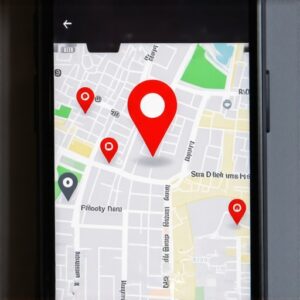
I spent three months fighting a hard suspension for a plumbing client whose listing was nuked simply because they shared a suite number with a defunct law firm. Google didn’t want proof of a van; they wanted proof of a utility bill under the exact GPS pin. I remember standing outside that suite, smelling the wet concrete after a rainstorm, looking at the storefront and seeing the discrepancy. The digital data said one thing; the physical reality said another. That gap is where rankings go to die. Most agencies look at a dashboard and see a green checkmark. I look at the storefront and see the pixelated glitch in the spatial database. Local SEO is no longer about keywords; it is about proving physical existence to a machine that is programmed to assume you are lying. We are operating in an era where the algorithm acts as a forensic investigator, scanning for the trace of a service area polygon or the specific JSON-LD LocalBusiness attributes that trigger voice search. When those signals do not align with the centroid theory, your business vanishes.
The ghost in the GPS coordinates
GPS coordinate salience and proximity signals determine Map Pack rankings by calculating the physical distance between the search user and the business centroid. Google uses Wi-Fi triangulation, IP address mapping, and mobile sensor data to verify if a local business actually occupies its stated physical address. If your coordinates are even slightly off, or if you are trying to rank from a virtual office, the system flags you. The math of proximity is unforgiving. If a user is 1.2 miles away and your pin is anchored to a mailbox center, you will never win the impression. The algorithm analyzes the physics of a 3 mile proximity radius shift. It knows when a phone slows down as it approaches your door. It tracks the gyroscope and accelerometer data to see if people actually enter your shop. This is why why verified business addresses still fail to rank even when the paperwork looks clean. The machine is looking for the behavioral fingerprint of a real location. It wants to see the movement of devices in and out of that spatial coordinate. If your pin is a ghost, your revenue will be a ghost too. Many businesses suffer because they moved their office without realizing that the old GPS data is still tethered to their brand. Google retains a memory of where you used to be. That memory creates a conflict. The conflict creates distrust. Distrust leads to the Map Pack filter.
“Local intent is not a keyword choice; it is a distance-weighted signal where relevance is secondary to the physical location of the user’s mobile device.” – Map Search Fundamental
The interaction metrics that actually matter
User interaction data, dwell time, and click-through rates serve as the primary trust signals for the Google Business Profile algorithm. Google prioritizes businesses that show high engagement levels, such as direction requests, click-to-call events, and direct messaging through the Google Maps app. While review counts help, they are secondary to how often users interact with the profile. This is the heartbeat of your listing. I have seen profiles with five hundred reviews get outperformed by profiles with fifty reviews because the latter had higher real world interaction. The system tracks how long a user looks at your photos. It notes if they save your location to a list. If you are why google prefers profiles with high interaction, you understand that the goal is to keep the user inside the Google ecosystem. Stagnant listings are dead listings. If nobody is clicking the call button, Google assumes the business is either closed or irrelevant. This is why you need a toolkit to rank higher in local map pack that focuses on engagement rather than just static data. You need to give people a reason to stop scrolling. High resolution, candid photos work better than staged stock images. The machine can detect the metadata of a photo taken on site. It knows if the image was captured at your actual coordinates. When a customer uploads a photo from their phone, it carries a GPS stamp. That is the ultimate proof of life.
Local Authority Reading List
- The Real Reason Competitors Outrank You
- Reversing Sudden Drops in Visibility
- Interaction Metrics for Growth
- Using Interaction Data to Boost Rank
Technical rot under your local map pin
Technical SEO health, website loading speed, and schema markup errors directly impact your local search visibility and Map Pack position. A slow website or broken mobile experience signals to Google that your local business provides a poor user experience, leading to a ranking drop. The connection between your site and your GMB profile is a two way street. If your website is infected with malware or has schema and structured data errors, your map pin will suffer. Google cannot trust a business that cannot maintain its own digital storefront. I have seen local rankings tank when website speed drops by just a few seconds. The mobile user is impatient. If they click from the map to your site and it takes five seconds to load, they bounce. Google records that bounce. It then decides that your business is not a good answer for that search query. We also see major issues with mixed language listings hurting local rankings in multi ethnic markets. If your header is in English but your metadata is in another language, the machine gets confused. Confusion is the enemy of the Map Pack. You must use seo services to fix slow website and technical issues before you even think about aggressive expansion. The foundation must be solid. This includes ensuring your NAP data on the site matches your profile exactly. A missing suite number on your contact page can be enough to trigger a verification loop.
The digital debris of abandoned business locations
NAP consistency and citation cleanup are required to remove conflicting location data that dilutes your local authority. Old business addresses, duplicate map pins, and incorrect phone numbers across web directories create a trust gap that prevents you from entering the top 3 Map Pack. Google is a massive database of facts. When it finds two different facts for the same business, it doesn’t choose the right one; it suppresses both. This is why abandoned locations kill your current rank. The ghost of your 2018 office is still haunting your 2025 profile. You need to wipe old business locations off the map using a surgical approach. Automated tools often miss the deep directory layers where the worst data lives. You need to scrub inconsistent NAP data manually to ensure every mention of your brand is identical. This includes the subtle things, like how you write “Street” versus “St.” while consistency is often called a myth, in the eyes of an automated validator, it is a binary pass or fail. Duplicate listings are another massive threat. If a competitor or a previous owner left a pin at your address, it is stealing your map authority. The algorithm splits the trust between the two profiles, ensuring neither reaches the top. You must perform a strategic clean up to merge that power back into your primary listing.
The three mile radius that determines your revenue
Local search proximity creates a geographic boundary where your business visibility is highest within a three mile radius of your verified address. Rankings typically drop off as the user moves further away from the business centroid, especially in high density urban areas. This is the reality of the Vicinity update. Google shrunk the fences. If you are a locksmith, you might have ranked for the whole city three years ago. Today, you rank for the four blocks around your shop. To fix this, you have to prove you are a local authority through niche industry citations. You need links from the local chamber of commerce, the neighborhood blog, and the city newspaper. These signals tell Google that your relevance extends beyond your physical walls. If you are why your local map reach stops at the city border, it is likely because your off page signals are too generic. You need geographic relevance. This is why cheap backlinks are tanking your local map authority. A link from a Russian news site does nothing for a baker in Chicago. It actually hurts you by signaling that your brand is associated with spam patterns.
“Local search is a zero sum game where the winner is the one who provides the most geographically relevant and technically sound answer to a mobile query.” – Map Search Fundamental
The suspension survival kit for local service providers
Google Business Profile suspensions occur when the algorithm detects a violation of terms, such as keyword stuffing, address rentals, or unverified service areas. To reinstate a listing, you must provide government issued documents, utility bills, and video verification that proves the business is legitimate. Getting a suspension is a nightmare. It feels like your business has been erased. If you are facing a hard suspension appeal, do not guess. Do not submit the same document five times. You need a suspension survival kit that includes a clear narrative for the support team. They are looking for reasons to say no. You have to make it impossible for them to deny your existence. This includes services to monitor and prevent future gmb suspensions because once you are flagged, you are on the radar. The second you change your phone number or your category, the system will trigger another check. If you have been banned, you might need local seo services to fix banned gmb listing issues that go deeper than just a simple form. Sometimes the issue is a partially suspended profile where you can still see it but you can’t edit it. This is a shadowban. It is a slow death. You must reclaim your visibility by recovering features on a shadowbanned profile through a systematic trust rebuild. Stop ignoring the signal gaps. The machine is watching your every move. It sees the mismatched phone number. It sees the slow loading website. It sees the ghost of your old office. Fix the foundation, or the Map Pack will remain out of reach.