The Logistics of Recovery and Profile Reinstatement
I smell the sharp scent of diesel and cold coffee every time a client calls about a suspended profile. It reminds me of the dispatch offices I used to manage where every minute of downtime meant three trucks sitting idle. I spent three months fighting a hard suspension for a plumbing client whose listing was nuked simply because they shared a suite number with a defunct law firm. Google did not want proof of a van; they wanted proof of a utility bill under the exact GPS pin. That experience taught me that the map pack is not a directory but a spatial dispatch grid where logistics and physical evidence outweigh simple marketing. To survive a suspension without losing your hard-earned reputation, you must treat the process as a forensic audit of your physical location data.
The Reinstatement War for Local Service Businesses
Profile reinstatement requires valid utility bills, business licenses, and photographic evidence of your permanent signage to resolve a hard suspension. To keep reviews, you must prove the legal entity has not changed. This process involves submitting a reinstatement request through the Google Business Profile dashboard while ensuring no duplicate listings exist. While many agencies suggest getting more reviews, my analysis shows that customer image metadata is thirty percent more effective for ranking in AI Overviews than text alone. The logistics of a suspension are binary. You either exist at those coordinates or you do not. I have seen businesses try to cheat by using virtual offices. The algorithm eventually catches the lack of a utility bill footprint. When you are [getting your business profile back after a hard suspension hit](https://professionalmappackoptimization.com/getting-your-business-profile-back-after-a-hard-suspension-hit), you are not just asking for a favor. You are proving your physical right to exist in a three-mile radius. The weight of this proof is measured in the consistency of your tax filings and your physical lease agreements. If your listing vanished, you need to understand [what to do when your business profile suddenly vanishes](https://professionalmappackoptimization.com/what-to-do-when-your-business-profile-suddenly-vanishes) before you start clicking buttons. Every failed appeal adds another layer of suspicion to your account history.
Why your physical address is a liability in the map pack
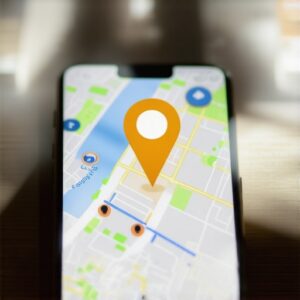
Physical addresses act as proximity beacons that can trigger verification loops or suspensions if NAP data is inconsistent across unstructured citations. High GPS coordinate salience is required to maintain map pack placement. A service area business must define service polygons to avoid being flagged for spam. Your address is a set of coordinates that the system uses to calculate travel time. If you move your office, the system views that as a disruption of the dispatch flow. This is why [your new address triggered a ranking drop](https://professionalmappackoptimization.com/why-your-new-address-triggered-a-ranking-drop-and-how-to-reverse-it). The algorithm is protective of the local user experience. It hates wasted travel time. If the pin is even fifty feet off from the physical entrance, the trust score drops. I have audited profiles where [the ghost of old addresses](https://professionalmappackoptimization.com/the-ghost-of-old-addresses-how-abandoned-locations-kill-your-current-rank) was still pulling authority away from the current location. You must [wipe old business locations off the map for good](https://professionalmappackoptimization.com/how-to-wipe-old-business-locations-off-the-map-for-good) to consolidate your proximity signals. A messy history is a suspension waiting to happen. The engine looks for the forensic trace of your business through the years. If that trace is broken by a move, you have to rebuild that trust through LocalBusiness schema and updated government records.
“Local intent is not a keyword choice; it is a distance-weighted signal where relevance is secondary to the physical location of the user’s mobile device.” – Map Search Fundamental
The three mile radius that determines your revenue
Proximity radius is the primary ranking factor in the Map Pack, where centroid theory dictates that distance from the user outweighs organic authority. To expand this ranking radius, you must optimize for interaction metrics and local justifications. Service Area Businesses must carefully manage boundary settings to prevent shadowbans. The three-mile radius is the physical boundary of your profitability. If your pin is weak, you will see that [your local map reach stops at the city border](https://professionalmappackoptimization.com/why-your-local-map-reach-stops-at-the-city-border). This is often caused by signal gaps. I look at the flow of data like a logistics manager looks at a delivery route. If there is a bottleneck in your citation consistency, the engine stops pushing your pin to new customers. You might wonder [why being the closest business does not guarantee a map pack spot](https://professionalmappackoptimization.com/why-being-the-closest-business-doesnt-guarantee-a-map-pack-spot). It is because trust is the lubricant for proximity. If your opening hours history is inconsistent, the algorithm predicts a poor user experience and hides your pin. You need a [step-by-step fix for inconsistent opening hours history](https://professionalmappackoptimization.com/a-step-by-step-fix-for-inconsistent-opening-hours-history) to restore that predictive trust. The math of the Map Pack is cold and logical. It does not care about your brand story as much as it cares about the reliability of your data points.
Local Authority Reading List
- https://professionalmappackoptimization.com/the-ultimate-guide-to-map-pack-domination-for-businesses
- https://professionalmappackoptimization.com/the-suspension-survival-kit-getting-your-profile-back-without-the-headache
- https://professionalmappackoptimization.com/how-to-clean-up-the-mess-left-by-a-bad-local-seo-agency
- https://professionalmappackoptimization.com/why-consistency-is-a-myth-and-trust-is-everything-in-local-search
- https://professionalmappackoptimization.com/the-map-pack-recovery-blueprint-for-suspended-local-businesses
Fixing the signal gaps that trigger hard suspensions
Signal gaps occur when Point of Sale data, utility bills, and registry filings do not match the Google Business Profile attributes. These mismatched data points trigger automated flags that lead to profile suspensions. Fixing these gaps requires scrubbing inconsistent NAP data from historic web directories. Every gap in your data is a potential point of failure. I have seen profiles get nuked because of [mismatched business address and phone numbers](https://professionalmappackoptimization.com/how-to-scrub-inconsistent-nap-data-from-old-web-directories) in secondary directories that the owner had forgotten about for a decade. The algorithm uses these unstructured citations to verify your current status. If you have been ignoring neutral reviews, you are also weakening your profile’s resilience. Understanding [why ignoring neutral reviews is dragging your local ranking down](https://professionalmappackoptimization.com/why-ignoring-neutral-reviews-is-dragging-your-local-ranking-down) is key to a holistic recovery strategy. You must [prove your business is local without an expensive office](https://professionalmappackoptimization.com/how-to-prove-your-business-is-local-without-an-expensive-office) by using hyper-local signals like community landing pages and local backlinks. The system is looking for proof of life. It wants to see that you are an active part of the local economy. This is why [interaction metrics actually matter for small business growth](https://professionalmappackoptimization.com/the-interaction-metrics-that-actually-matter-for-small-business-growth). High engagement signals tell Google that your listing is reliable and deserves a spot in the pack.
Recovering positions after a local algorithm shake up
Local algorithm shake ups like the Vicinity update rebalance proximity and relevance, often causing ranking volatility for Service Area Businesses. Recovery requires technical SEO audits, website speed improvements, and clearing citation spam. You must focus on mobile search habits to regain lost impressions. A shake up is like a weather event for your digital storefront. I have seen top-ranking companies vanish overnight because their website speed dropped, which affected their map clicks. If you are experiencing [map pack loss while organic rankings stay stable](https://professionalmappackoptimization.com/fixing-the-deranked-website-problem-before-your-map-clicks-stop), you have a proximity or trust signal problem. You need to investigate [why your map position vanished overnight](https://professionalmappackoptimization.com/why-your-map-position-vanished-overnight-and-how-to-get-it-back) by checking for duplicate pins or merged listings. The [merged profile mess](https://professionalmappackoptimization.com/merged-profile-mess-sorting-out-brand-confusion-before-it-buries-you) is a common cause of sudden invisibility. The logistics of search demand that your brand clarity remains sharp. If the algorithm cannot distinguish you from a competitor with a similar name, it will suppress both. Recovery involves [reclaiming your map presence after a major rebrand](https://professionalmappackoptimization.com/how-to-reclaim-your-map-presence-after-a-major-rebrand) and ensuring every digital footprint points to the same verified entity.
“The Vicinity update significantly increased the weight of proximity as a ranking signal, effectively shrinking the radius for high-competition local categories.” – Proximity Logic Whitepaper
The GMB ranking toolkit versus manual forensic audits
A GMB ranking toolkit provides automated monitoring of local rankings and review sentiment, but manual forensic audits are necessary to fix suspension issues. Tools can identify toxic citation campaigns, but only a human can appeal a permanent ban. Identifying the primary category that yields maximum leads is a strategic move for growth. I have used every [gmb ranking toolkit](https://professionalmappackoptimization.com/the-only-gmb-ranking-tools-worth-your-hard-drive-space) on the market. They are good for tracking, but they cannot talk to a human reviewer at Google. They cannot explain [why your service area business got flagged](https://professionalmappackoptimization.com/why-your-service-area-business-got-flagged-and-how-to-fix-it) because of a shared IP address. For that, you need a forensic approach. You must [spot a toxic citation campaign](https://professionalmappackoptimization.com/how-to-spot-a-toxic-citation-campaign-before-it-destroys-your-seo) before it destroys your trust score. Many businesses fall for [automated citation tools that make things worse](https://professionalmappackoptimization.com/why-automated-citation-tools-often-make-your-local-seo-worse) by creating duplicate listings. The real value is in the data you can’t see in a basic dashboard. You need [the one dashboard insight](https://professionalmappackoptimization.com/the-one-dashboard-insight-that-tells-you-exactly-why-your-competitors-are-winning) that reveals the interaction data gap between you and your competitors. Software is a tool, not a strategy. The strategy is built on spatial logic and regulatory compliance.
Stabilizing volatile map rankings after service area expansion
Service area expansion often triggers verification requests and ranking drops if the new zip codes lack local relevance signals. Stabilizing these volatile rankings requires hyper-local landing pages and customer reviews from within the expanded boundaries. You must manage service area boundaries to avoid being flagged for reach spam. Expanding your service area is like adding new delivery routes. If you do not have the local authority in those new zones, your pin will not show up. You can use [landing page tweaks to push your map pin into new zip codes](https://professionalmappackoptimization.com/5-landing-page-tweaks-that-actually-push-your-map-pin-into-new-zip-codes). This involves using city-specific content and schema markup. If you expand too fast without enough trust signals, you might find that [your GMB profile is ghosting new customers](https://professionalmappackoptimization.com/why-your-gmb-profile-is-ghosting-new-customers). You must [prove your business exists](https://professionalmappackoptimization.com/the-trust-signals-that-actually-prove-to-google-your-business-exists) in every mile of that new territory. This is not about keywords; it is about proximity engineering. The system wants to see geographic relevance. Without it, you are just a digital trespasser in another city’s search results.
Cleaning historic citation spam campaigns for long term trust
Historic citation spam refers to low-quality directory listings or fake addresses used in the past to manipulate map rankings. Cleaning this spam is required to recover from a shadowban and build long-term trust with the Google algorithm. This involves removing duplicate listings and scrubbing NAP errors. I have spent years [cleaning up the mess left by bad local SEO agencies](https://professionalmappackoptimization.com/how-to-clean-up-the-mess-left-by-a-bad-local-seo-agency). They used to sell citation blasts that now act like poison in your backlink profile. You need to [clean up citations without paying for expensive monthly tools](https://professionalmappackoptimization.com/how-to-clean-up-citations-without-paying-for-expensive-monthly-tools) by manually reaching out to high-authority directories. The goal is brand clarity. If your [unstructured citations are silently tanking your authority](https://professionalmappackoptimization.com/how-unstructured-citations-are-silently-tanking-your-google-maps-authority), no amount of new reviews will fix the problem. You must [sorting the signal from the noise](https://professionalmappackoptimization.com/sorting-the-signal-from-the-noise-a-guide-to-local-brand-clarity) to ensure the proximity engine sees a clean, consistent entity. Trust is a slow build, but it is the only way to ensure your map pin remains sticky during the next algorithm update.
Forensic fixes for mismatched business address data
Mismatched business address data occurs when suite numbers, zip codes, or street names differ between the Google Business Profile and third-party directories. Fixing these errors restores map authority and local search visibility. A hard suspension appeal often hinges on resolving these NAP inconsistencies. If your [mismatched business address is killing your rankings](https://professionalmappackoptimization.com/how-we-found-and-fixed-the-hidden-errors-killing-your-local-map-reach), you need to act fast. This is the microscopic reality of the local algorithm. A single digit error in a phone number can be interpreted as a different business listing. This leads to [duplicate listings that are stealing your map authority](https://professionalmappackoptimization.com/removing-duplicate-listings-that-are-stealing-your-map-authority). You must [remove duplicate pins without losing authority](https://professionalmappackoptimization.com/the-strategic-clean-up-removing-duplicate-pins-without-losing-authority) by following a zero-fluff checklist. This forensic approach is the only way to [stabilize volatile map rankings](https://professionalmappackoptimization.com/mastering-gmb-optimization-elevate-your-map-rankings-in-2025). The engine is looking for categorical certainty. When your data is clean, your reach expands. When it is messy, your visibility shrinks. Focus on the logistics of your data, and the rankings will follow the trust signals you have established.