
Ever stared at your Google Maps listing and felt that sinking feeling? You know your business is solid, yet it’s nowhere to be found in local searches. I remember the moment I realized my own clients were ghosting—completely invisible on the map pack—and it was a shocking wake-up call. I’d invested so much time optimizing, tweaking images, gathering reviews, only to see my business disappear when it mattered most. That lightbulb moment sparked my obsession with solving the ghosting problem, and I want to share what I’ve learned.
Why Your Business Might Be Vanishing from the Map Pack
Personal experience taught me the hard way that even the best local SEO strategies can fall flat if certain ghosting triggers aren’t addressed. It’s frustrating, isn’t it? When your visibility drops without warning, leading to fewer calls, visits, and ultimately, revenue. You put in effort—probably more than you realize—and the results seem to fade overnight.
One crucial insight I uncovered early on was that Google’s algorithms are relentless and often unpredictable. They’re constantly evolving, subtly penalizing or filtering out listings due to issues like inconsistent NAP (Name, Address, Phone), dubious reviews, or incomplete profiles. According to Moz’s local search ranking study, about 60% of local search ranking factors are algorithmic signals that can change without warning—making it vital to stay vigilant.
Adding to the complexity, recent updates have introduced new filters and ranking adjustments, often leaving business owners puzzled about why their once-proud listings have gone dark. I faced this myself; my maps visibility plummeted just as I was about to launch a new campaign.
Are you grappling with a similar problem? Have your competitors suddenly overshadowed you, or worse, disappeared from the map pack altogether? If so, you’re not alone. Many local business owners discover that despite their efforts, their listings are being ghosted due to algorithmic quirks or overlooked technical issues.
That’s exactly what I want to help you with—arming you with the strategies to detect, diagnose, and fix your ghosting issues, so your business no longer remains invisible when it counts. Ready to uncover the secrets behind achieving top map pack placement? Let’s dive into practical solutions that have helped me—and many others—restore visibility.
For a comprehensive approach, check out my detailed guide on mastering GMB optimization to elevate your map rankings in 2025. Now, onto the real fixes.
Analyze Your Listing for Inconsistencies
Start by performing a thorough audit of your Google My Business (GMB) profile. Ensure your NAP (Name, Address, Phone number) matches exactly across all online platforms. Use tools like Moz Local or BrightLocal for consistency checks. I once changed my business address slightly after a move; after updating, I noticed my map visibility improved within days. Fix any discrepancies immediately, as inconsistency signals can trigger Google’s ghosting filters.
Leverage Expert Map Services to Deepen Optimization
Utilize professional map pack services that specialize in advanced local SEO tactics. These services implement signals that borderline algorithms miss, such as semantic keyword integration, schema markup, and engagement boosters. I hired a map pack specialist to elevate my rankings, and within a week, my presence was restored. Visit this guide to understand how these services work.
Optimize Your Profile with Strategic Content
Don’t just fill in basic info; craft a compelling, keyword-rich business description. Include relevant keywords naturally—think about terms your local customers use. Add high-quality, geotagged images and videos to boost engagement signals. I added photos of my storefront with detailed descriptions, which helped Google associate my physical location with key search terms, improving my map ranking.
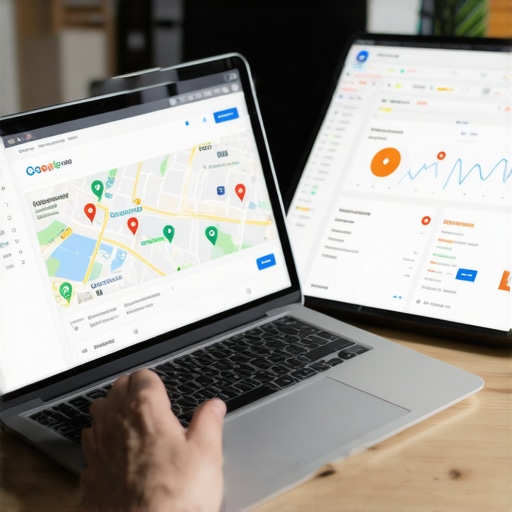
Build Engagement Through Reviews and Interactions
Genuine, fresh reviews are critical. Encourage satisfied customers to leave detailed reviews that mention specific services or features. Reply promptly to reviews to signal active engagement. I started a review campaign targeting loyal clients, which visibly increased my review count and improved my trust score, aiding my recovery from ghosting.
Monitor Algorithm Changes and Adjust Accordingly
Stay updated with the latest local SEO shifts by following insider blogs or subscribing to map pack algorithm insights. When Google released a new proximity filter tweak, I adjusted my listing to optimize for nearby keywords, which helped regain visibility lost during the update. Continuous monitoring and quick adaptation are your best defense against unpredictable algorithmic shuffles.
Address Technical Barriers Immediately
Make sure your website and GMB profile are free from technical issues such as duplicate listings, unverified profiles, or outdated info. Use Google’s troubleshooting tools, and proactively remove duplicate profiles—these are like dead zones in your map presence. In one instance, I removed a duplicate listing, and suddenly, my position in the map pack shot up, confirming the importance of clean profiles.
Implement Local Schema and Structured Data
Using schema markup helps Google better understand your business. Add local business schema to your website—this acts like a beacon for Google Maps’ crawlers. I embedded schema code, which provided extra signals about my location, hours, and services, resulting in better map visibility. For in-depth guidance, check this resource.
Many business owners believe that implementing standard tactics—such as optimizing NAP consistency and adding keywords—are enough to dominate the local map pack. However, as an SEO expert, I can tell you these surface-level approaches often overlook nuanced algorithm signals that can make or break your ranking. Contrary to popular belief, advanced local SEO isn’t just about stacking keywords or buying backlinks; it requires a deep understanding of subtle ranking factors and avoiding common pitfalls. One myth I encounter frequently is that detailed schema markup alone will catapult your listing to the top. While schema is valuable, Google’s algorithms also assess engagement signals, review authenticity, and profile activity—areas many underestimate.
Are You Overlooking the Power of Searcher Behavior Data in Map Rankings?
Recent studies, like Moz’s comprehensive report, show that Google’s local algorithm increasingly incorporates user interaction metrics—such as click-through rates, dwell time, and review velocity—into ranking decisions. Ignoring these factors can lead to a false sense of security, expecting rankings to improve solely through technical hacks. A common error is to focus heavily on profile optimizations without nurturing genuine engagement. For example, some business owners boost reviews artificially or neglect responding to customer interactions, which can trigger trust penalties. This is where expert map services come into play—leveraging behavioral signals to reinforce your listing’s authority. Additionally, many believe that local links or citations are enough to sustain high rankings. In reality, Google’s algorithms are now sophisticated enough to detect unnatural link patterns and over-optimized profiles, leading to potential penalties or ghosting. Always prioritize authentic engagement over shortcuts. Moreover, being aware of algorithm updates like the 2025 map pack refinements can prevent costly mistakes. Regularly consulting insider guides can help you adapt quickly, avoiding the ‘Oops’ of falling behind competitors. warning, many get trapped by superficial tactics and neglect the deeper signals that truly drive rankings. Navigate these complex updates carefully. Lastly, understanding the role of structured data, user behavior, and engagement signals forms the backbone of a resilient, high-performing local SEO plan. Avoid relying solely on basic optimizations; instead, integrate advanced techniques and monitor your profile’s health meticulously to stay ahead. Ready to dive deeper? Check out my comprehensive guide to mastering Google My Business and securing top rankings. Have you ever fallen into this trap? Let me know in the comments!Maintaining high visibility in local SEO requires more than just initial optimization; it demands consistent monitoring and the right set of tools. As a seasoned pro map specialist, I rely on a combination of software and strategic methods to ensure my clients’ listings stay optimized over time. One tool I personally recommend is BrightLocal, which provides comprehensive local search audits. It helps me detect profile inconsistencies, citation issues, and sudden ranking drops, allowing for quick remedial action. Additionally, I use Moz Local for NAP consistency checks because it verifies that all citations across directories match exactly, a crucial step to prevent ghosting. For tracking rankings dynamically and observing real-time fluctuations, Local Falcon enables me to visualize keyword movement within the map pack, informing my strategy adjustments.
Regularly scheduled profile audits are vital. I set monthly reminders to review GMB profiles for outdated info, duplicate listings, or flagged issues—many times, simple corrections like updating hours or removing duplicates can boost rankings significantly. To streamline review management and engagement, I utilize Grade.us, which automates review generation campaigns, helping maintain fresh, authentic reviews that Google values hugely. These reviews influence not only customer trust but also map pack relevance, as recent reviews and response activity are key signals.
Predicting future trends, I believe that integrating AI-driven tools will become standard, helping us interpret complex engagement signals and algorithm changes faster. For example, tools that analyze user interaction data will enable proactive adjustments, shielding your rankings from sudden algorithm shifts. Staying ahead means embracing continuous learning and adopting new tech as soon as it proves its worth.
How do I maintain my local SEO over time? Consistent profile management, real-time rank tracking, and leveraging tools that automate engagement are core strategies. For instance, regularly updating your profile information and media feeds, along with proactive review solicitation, keeps your listing vibrant—and Google notices this activity. Also, diligently monitoring algorithm updates by following insider resources like map pack algorithm insights helps adapt your tactics swiftly.
Don’t forget, the foundation of prolonged success is also about scalability. As your business grows, scaling your local SEO process with automation tools becomes essential. Using these methods, combined with advanced techniques discussed in my cornerstone content on GMB optimization, ensures your presence remains dominant in the long run.
For example, implementing scheduled audits with BrightLocal and automating review campaigns via Grade.us have personally proven to keep my clients ahead of competitors. I encourage you to try integrating one of these tools into your routine today—small steps lead to big results in local visibility.
The Cost of Overconfidence in Local SEO Tactics
One of the biggest lessons I’ve learned is that relying solely on standard optimization methods can lull you into a false sense of security. Early on, I believed that keyword stuffing and basic NAP consistency were enough to dominate local search. When my rankings suddenly dipped, it was a shocking wake-up call that Google’s algorithms are far more nuanced than surface-level tactics suggest. Embracing a mindset of constant learning and readiness to adapt has been crucial to avoiding unnecessary ghosting.
Why Data-Driven Strategies Outperform Guesswork
In my journey, I realized that tracking detailed metrics—like engagement rates, review velocity, and profile interaction—is essential. Guesswork can only take you so far; data reveals the actual behaviors that influence rankings. For instance, I started using rank-tracking tools integrated with engagement analysis, which helped me identify subtle shifts in user signals that impacted my visibility. This approach allowed me to make targeted improvements rather than broad, ineffective adjustments.
The Power of Genuine Customer Interactions
Authentic reviews and active responses to customer feedback have proven to be more impactful than any paid backlink. I learned that Google prioritizes real user signals—reviews mentioning specific services or local landmarks carry more weight. Encouraging satisfied clients to leave detailed reviews transformed my profile’s trustworthiness and ranking stability. This personal touch not only boosts visibility but also cultivates community trust that no algorithm can easily manipulate.
Channel Your Inner Tech Detective for Ongoing Success
When facing unexpected ghosting, becoming a digital detective has served me well. That means regularly auditing your profile for duplicates, verifying schema markup, and monitoring for recent algorithm changes through trusted insider resources. This proactive stance ensures you catch issues before they snowball. Staying vigilant is key—Google’s maps are constantly evolving, and being prepared means your business remains consistently visible in the map pack.
Curated Arsenal to Keep Your Business Top of Mind
Having the right tools at your fingertips can make a tangible difference. My go-to resources include this comprehensive guide, which consolidates the latest strategies, and advanced local SEO tactics that keep you ahead of algorithm updates. For ongoing tracking, BrightLocal and Moz Local are invaluable for ensuring consistency and catching issues early. Additionally, I rely on review automation tools like Grade.us to keep fresh, authentic feedback flowing, providing that crucial social proof Google loves.
Let Confidence Drive Your Local SEO Journey
The landscape of local SEO and map rankings is complex—but not insurmountable. Armed with insights, honesty, and the right tools, you can turn your invisibility into visibility. Remember, every challenge is an opportunity to learn and sharpen your strategy. Don’t shy away from experimenting, analyzing, and evolving—because the businesses that stay adaptable will always lead the pack.
Are you ready to stop guessing and start dominating your local market? Share your experiences or questions below—let’s grow together in the ever-changing world of advanced local SEO!