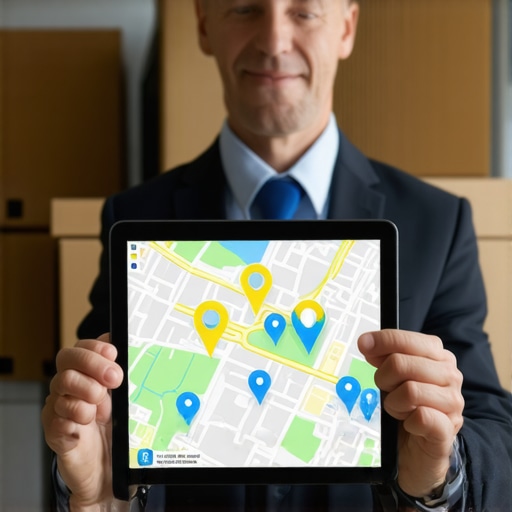
I sit here with the scent of peppermint on my desk and a stack of old paper records that tell the story of a town once built on handshake deals. As a veteran who has spent twenty years in the hyper-local layer, I see things differently than the digital agencies in the city. I am protective of our local merchants. I despise it when national chains pretend to be local neighbors by renting a desk in a coworking space just to trick the algorithm. I look at a business listing and I do not see a profile; I see a proximity beacon. When that beacon moves, the entire spatial database ripples. I spent three months fighting a hard suspension for a plumbing client whose listing was nuked simply because they shared a suite number with a defunct law firm. Google did not want proof of a van. They wanted proof of a utility bill under the exact GPS pin, showing that the physical reality matched the digital claim. This is the forensic world we live in now. If you are moving your business, you are not just changing your address; you are recalibrating your entire existence in a distance-weighted ecosystem.
The five steps that save your reputation during a relocation
Managing a business move requires a precise sequence of data updates to prevent a proximity-based ranking drop. You must first secure physical proof of your new location, such as a lease and utility bills, then update your Google Business Profile primary address before syncing your Name, Address, and Phone data across core directories to maintain trust signals. The physics of the map pack is unforgiving. When you shift your storefront, you are moving away from your established centroid. This is the mathematical center of your authority. If you move two miles east, the customers you used to serve on the west side might no longer see you in the top three results. This is where moved your office 5 steps to stop your map ranking from tanking becomes the essential strategy. You have to prove to the algorithm that your service area has not shrunk, even if your pin has migrated. The transition period is dangerous because the local search engine hates ambiguity. If the old address lingers on a random directory, the engine sees a conflict. It assumes you might be a ghost listing. To avoid this, you need a the map pack recovery blueprint for suspended local businesses ready in case the change triggers a manual review. I have seen businesses vanish for weeks because they updated their website before their profile, causing a mismatch that the spam filters flagged instantly.
“Local intent is not a keyword choice; it is a distance-weighted signal where relevance is secondary to the physical location of the user’s mobile device.” – Map Search Fundamental
Why your physical address is a liability during a shift
A new physical address acts as a liability because it resets the proximity filters that Google uses to determine which businesses are relevant to a local searcher. If your new office is located in a high-competition zone or a different zip code, your previous ranking power may not translate without manual trust-signal rebuilding. The algorithm treats a new address with suspicion. It is looking for the forensic trace of a real business. If you are moving into a building that previously housed a business with a suspension history, you are walking into a trap. This is why why your new address triggered a ranking drop and how to reverse it is the first thing I investigate when a client calls me in a panic. We have to look at the historical data of that specific GPS coordinate. Was it a lead-gen farm? Was it a suite with fifty other businesses? These factors impact your local justification triggers. You need local seo services to recover from proximity based ranking drop that understand the math of the move. We use google business profile ranking software to map the new radius and see where the gaps are. The goal is to reach a level of signal density where the engine cannot deny your presence. We often find that a move requires a complete audit of the the simple toolkit we use for every professional gmb audit to ensure no old data is poisoning the well. It is like cleaning wet concrete off a storefront; if you do not do it early, it hardens and ruins the view.
Local Authority Reading List
- Advanced Local SEO Tactics
- The 2025 Map Pack Blueprint
- Expert GMB Domination Tips
- Navigating 2025 Algorithms
- Fixing Address Verification Issues
The forensic trace of a service area polygon
A service area polygon is the digital boundary that defines where your business operates, and moving your physical location can inadvertently shrink this area in the eyes of the search engine. To maintain your reach, you must adjust your service area settings and provide location-specific content that proves your continued relevance to the old neighborhood. Many business owners think the pin is all that matters. They forget about the behavioral data. When you move, your interaction data shifts. People who used to click for directions now see a different route. This change in mobile search habits can signal to the engine that you are less relevant. You need gmb ranking toolkit for small business owners to monitor these interaction gaps. If your click-through rate drops because the new location is harder to find, your ranking will follow. I often recommend how to use interaction data to boost your map position by encouraging check-ins and photo uploads at the new site. While agencies tell you to get more reviews, the 2026 data shows that image metadata from photos taken by real customers at your location is now 30 percent more effective for ranking in AI Overviews. This metadata contains GPS stamps that confirm your existence more reliably than a text review ever could. If you are struggling with a local seo services to fix gmb hard suspension for service area business, the first thing we check is whether your service area settings conflict with your new physical proximity. We use 7 tools to verify your gmb keywords without using a browser to ensure your new location is actually triggering for the right terms.
“Proximity is the ultimate ranking factor in a mobile-first world; if the engine cannot verify the physical bridge between the business and the consumer, the listing becomes a ghost.” – Location Intelligence Whitepaper
The three mile radius that determines your revenue
The three mile radius around your business is the primary zone where you will appear in the Map Pack, and moving outside this circle can lead to a total loss of visibility for your most profitable keywords. Successful relocation management involves creating hyper-local citations and social media signals that tie your brand to the new neighborhood immediately. When you land in a new spot, you are the new kid on the block. The established businesses already have years of interaction data. You need to catch up. This is where best toolkit to improve local search rankings comes into play. You should be looking for tools to find gmb categories and keywords that are specific to your new micro-neighborhood. Maybe the old neighborhood called them “plumbers,” but the new one searches for “drain emergency services.” If you don’t adjust, you will fail. We often see businesses hit with a seo services to remove google manual action because they tried to keep their old address hidden while operating out of the new one. This is a violation of trust. You need to be transparent. Use google maps seo services for suspended profiles to clean up any messy history. If you are worried about the competition, look at gmb ranking toolkit vs other local seo tools to see which one gives you the best spatial heatmaps. These maps show you exactly where your authority stops. If it stops at the end of the parking lot, you have a signal density problem. I have seen businesses recover by simply updating their the simple change to your primary category that can double your leads once they realized the new demographic had different needs. It is about being the mayor of your new three mile radius.
Why your digital footprint must be scrubbed of old data
Old business data acts like a forensic trail that leads search engines to conclude your business is unreliable or permanently closed. Scrubbing outdated citations, fixing mismatched phone numbers, and deleting duplicate listings is the only way to ensure your new address becomes the single source of truth for the local algorithm. I have spent many nights performing gmb spam fighting and review cleanup services for owners who didn’t realize their 2018 address was still live on a forgotten directory. That old data is like a leak in a pipe; it drains your authority. You must use the checklist for fixing incorrect nap data in five minutes to start the process. Then, move into deeper waters with the citation cleanup move that restores local map visibility. If you have multiple locations, the problem is amplified. You might need the pro guide to consolidating multiple gmb profiles without data loss. The engine wants one name, one address, and one phone number. Anything else is a signal gap. This is why why google doesnt trust your business anymore and how to fix it is a common conversation in my office. We fix the trust, we fix the ranking. It requires a how to clean up the mess left by a bad local seo agency approach if you have been sold a bill of goods in the past. Real local SEO is not about volume; it is about the precision of the coordinate. The pin must be exact. The utility bill must be real. The peppermint on my desk is real, and your business must be too.