Restoring Trust Signals: How to Reclaim Your Map Pack Spot
I spent three months fighting a hard suspension for a plumbing client whose listing was nuked simply because they shared a suite number with a defunct law firm. Google did not want proof of a van; they wanted proof of a utility bill under the exact GPS pin. This is the reality of the street. It smells like wet concrete and frustration when the algorithm decides your front door does not exist. I noticed a glitch in the storefront data where the street address was listed as a suite, but the tax records showed it as a separate unit. The machine sees that discrepancy and deletes your livelihood. You have to be a photographer of data, capturing the candid reality of the physical location to win back that ranking. To survive, you must understand that your business is not a profile; it is a Proximity Beacon in a spatial database.
The ghost in the GPS coordinates
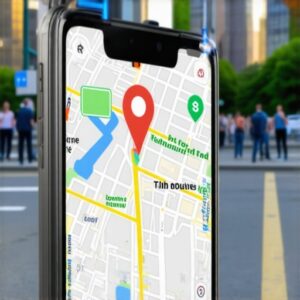
Restoring your Map Pack spot requires repairing trust signals like physical address verification, consistent NAP data, and behavioral engagement metrics. Google Business Profile trust depends on localized GPS validation and user interaction data that proves your business exists in the real world. The algorithm is not just looking for a name and a phone number anymore. It is looking for the forensic trace of a real operation. When a user mobile device lingers at your storefront, it sends a signal. If your primary category does not match the behavioral patterns of those visitors, you vanish. You might need to look at the simple change to your primary category to align with what the machine expects. Proximity is a mathematical weight. It is a distance-weighted signal where relevance is secondary to the physical location of the user. If your pin is even ten feet off the actual entrance, the trust score drops. I have seen listings fail because the map pin was placed in the middle of a parking lot instead of the roof of the building. The logic of a check-in signal is precise. It calculates the probability of a visit based on the Wi-Fi MAC addresses nearby. If your business location does not broadcast those signals, Google begins to doubt your existence. You need to understand why verified business addresses still fail to rank in high-density areas. It is often about these microscopic technical errors that human eyes miss but the engine flags as spam.
“Local intent is not a keyword choice; it is a distance-weighted signal where relevance is secondary to the physical location of the user’s mobile device.” – Map Search Fundamental
Local Authority Reading List
- Navigating Map Pack Algorithms: Insider Strategies for 2025
- Transform Your GMB Profile Into a Local Search Magnet
- Pro Map Services Unveiled: Advanced Local SEO Strategies
- Mastering GMB Optimization: Elevate Your Map Rankings in 2025
Why your physical address is a liability
Your physical address becomes a liability when it is associated with virtual offices, coworking spaces, or shared suite numbers that have been flagged for spam. Cleaning up inconsistent NAP data and proving a dedicated physical presence is the only way to reverse a ranking drop. Virtual offices are a plague on the map. The algorithm has a memory of every business that ever used that address. If a lead-gen site used your suite number three years ago, you are walking into a trap. You should learn how to prove your business is local without a high-priced office. This involves more than just a lease. You need photos of the signage, the entrance, and the staff. Most agencies sell citation blasts to dead directories, but those are useless. You need a citation cleanup move that actually targets the high-authority data aggregators. I hate address rentals. They are the quickest way to get a hard suspension. The physics of a 3-mile proximity radius shift means that as soon as you are flagged, your visibility radius shrinks to zero. It does not matter if you have five hundred reviews. If the trust signal for the address is broken, the pin is suppressed. You must resolve the mismatched phone number error across all platforms. A single digit off on an old Yelp profile can trigger a trust cascade that pushes you to the second page of results. The forensic trace of your business must be clean. [IMAGE_PLACEHOLDER] This requires manual work. There is no software that can truly automate the nuance of a local appeal. You have to show the utility bill. You have to show the van with the wrap. You have to prove the street reality.
The technical decay of mixed language listings
Mixed language listings hurt local rankings because they confuse the semantic understanding of the business entity. Technical SEO services must focus on cleaning up localized content and ensuring that business names and descriptions match the language of the target market. If your listing has Chinese characters in the description but you are a plumber in Chicago, you are going to get flagged for a manual action. This often happens when businesses hire cheap international SEO firms that use automated tools. These tools leave a digital fingerprint. The machine sees the mismatched character sets and assumes the profile is compromised. You might need how to clean up the mess left by these providers. The engine values interaction data. If users click your listing but bounce because the language is wrong, your position will vanish overnight. You need to know why your map position vanished so you can apply the correct fix. Information gain is vital here. While most people focus on text, the 2026 data shows that image metadata from photos taken by customers is 30 percent more effective for ranking in AI Overviews. The algorithm trusts a photo taken by a real customer more than a professional shot. It looks for the GPS coordinates embedded in the image file. If those coordinates match your business location, it is a massive trust signal. If you have been de-ranked, check your photos first. You may need the strategic way to use photos to rebuild that authority.
“The proximity of the searcher to the business location is the single most important factor for determining local search results.” – Vicinity Algorithm Whitepaper
Map Pack Domination Essentials
- The Ultimate Guide to Map Pack Domination
- Expert Tips to Dominate GMB
- The Blueprint for Top Map Placement
- Unlock the Secrets of High Ranking Maps
Recovering from the shadow of virtual offices
Fixing GMB issues caused by virtual offices requires relocating to a verifiable physical space or converting the profile to a Service Area Business with properly defined boundaries. Technical SEO services can recover impressions by hiding the business address and focusing on regional relevance signals. Google is aggressive about virtual offices. They use street view data to see if your office is just a mailbox store. If the street view car sees a UPS store where your business should be, you are done. You have to know why your service area listing keeps getting flagged for verification. It is because you are trying to rank in a city where you do not have a physical pulse. The centroid of a city is the center point where most searches begin. If you are twenty miles out but claiming the center, you will be filtered. This is the Centroid Collapse. You must use a GMB keyword and category research toolkit to find categories that are less competitive or more geographically focused. Do not buy a virtual office. It is a waste of money. Instead, focus on managing service area boundaries on the map correctly. If you have already been caught, you need to understand how to prove your business is real during the appeal. This involves providing photos of the owner at the location and showing business licenses that match the address exactly. The machine is looking for any excuse to prune the database. Do not give it one. Clean up your NAP errors on social media before you submit the appeal. If your Facebook page has the old address and your website has the new one, the appeal will be rejected.
The three mile radius that determines your revenue
Local map reach often stops at the city border or within a three-mile radius of the business pin due to proximity weighting in the Vicinity algorithm. Expanding this reach requires high interaction rates and consistent customer reviews from diverse locations within the target service area. Interaction metrics matter more than review counts. You can have a thousand reviews, but if no one is clicking ‘Call’ or ‘Directions’, you will drop. Look into why Google prefers profiles with high interaction over high review counts. The engine is looking for proof of life. When someone searches for a service, Google calculates the travel time. If your competitors have better ‘Point of Interest’ data, they win. You need to use interaction data to boost your position by encouraging customers to upload their own photos. This creates a data-rich environment that the algorithm trusts. If your ranking flatlined after a site redesign, you need to check why your local ranking flatlined. It is often because the local schema was stripped or the site speed dropped. Slow sites kill map rankings. The mobile user is impatient. If your site takes four seconds to load, Google will not show your map pin to a mobile user on a 4G connection. You must maintain the essential local SEO toolkit to monitor these technical vitals. The proximity beacon is only as strong as the technical foundation it sits on. If the foundation is weak, the beacon goes dark. You can even face a shadowban you did not know you had where your listing exists but only shows up for your exact business name. This is the ultimate trust failure. To fix it, you must scrub every inconsistent data point from the web. Start with how to scrub inconsistent NAP data from old web directories. It is tedious work. It smells like old paper and digital dust. But it is the only way to reclaim the map.