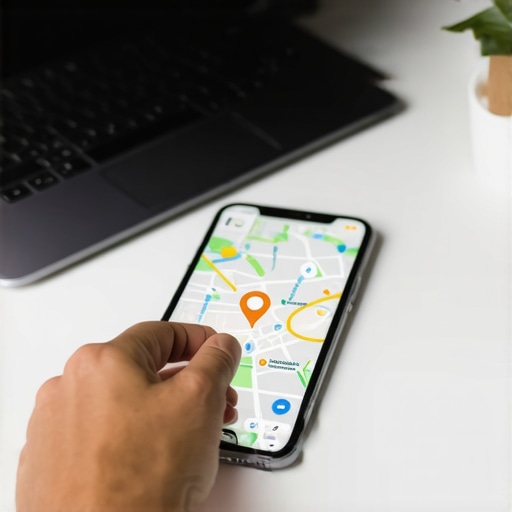
How to Fix NAP Errors on Social Media and Local Directories
I notice the glitches before I notice the business itself. Walking through downtown, I see the storefront sign and my mind automatically compares it to the digital ghost residing in the Google Map Pack. I smell the wet concrete after a spring rain, holding my camera, looking for the tiny inconsistencies that kill a local business. A mismatched suite number on a faded Yelp page. A phone number on a defunct Facebook profile that belongs to a pizza shop three blocks away. These are not just typos. These are fractures in the proximity beacon that Google uses to determine if you exist in the physical world.
The reinstatement war of suite number forty two
Fixing NAP errors requires a systematic audit of every digital touchpoint where your business Name, Address, and Phone number appear. Discrepancies in these data points create trust friction for Google algorithms, leading to rank suppression or profile suspension. Establishing a single source of truth is the absolute priority. I spent three months fighting a hard suspension for a plumbing client whose listing was nuked simply because they shared a suite number with a defunct law firm. Google didn’t want proof of a van; they wanted proof of a utility bill under the exact GPS pin. The algorithm saw two entities at one coordinate and decided both were ghosts. We had to scrub every mention of that law firm from the local web before the plumbing listing would breathe again. When you are getting your business profile back after a hard suspension hit, you realize that Google is a detective that hates contradictions. The microscopic math of a GPS coordinate is unforgiving. If your Facebook page says Suite B and your Google profile says Suite 2, you have a data conflict that lowers your proximity authority.
The ghost in the GPS coordinates
Mismatched business data acts as a signal suppressor that limits how far your map pin reaches into neighboring suburbs. When Google encounters conflicting phone numbers or addresses across social media and directories, it reduces the confidence score of your location, causing your profile to vanish for high-value searches. I look at a business listing and see a spatial database entry. Every citation is a vote of confidence. If those votes have different names on them, they are discarded. This is why you must understand fixing the mismatched phone number error on local citations. A phone number is more than a way to call you; it is a unique identifier in the local knowledge graph. When you change your number, you don’t just update your website. You must hunt down the ghost versions on old yellow pages and forgotten LinkedIn profiles. A single stray digit in a secondary directory can trigger a verification loop that keeps your GMB profile with limited functionality for months. The algorithm is looking for a perfect match across the primary data aggregators. Any deviation is seen as a sign of a business that is no longer operational or, worse, a spam listing trying to game the system.
“Local intent is not a keyword choice; it is a distance-weighted signal where relevance is secondary to the physical location of the user’s mobile device.” – Map Search Fundamental
Why your physical address is a liability
Your physical address becomes a liability when local directories contain conflicting geographic data or outdated location signals. Google uses distance-weighted signals to determine relevance, meaning a single incorrect digit in a zip code can physically move your proximity beacon away from your target customers. Most owners forget their old locations. They move across the street and think the job is done. But the internet has a long memory. The ghost of old addresses can haunt your current rankings for years. I have seen businesses lose thirty percent of their call volume because an old directory still listed their 2018 address. Google sees this and thinks the business is unstable. You need a forensic approach to how to scrub inconsistent nap data from old web directories without relying on automated tools that often miss the deeper layers of the web. Automated software is a hammer, but NAP cleanup requires a scalpel. You need to verify that the social media handles match the brand name exactly. If your Instagram is ‘JoePlumbing’ but your Facebook is ‘JoesPlumbingLLC’, you are creating brand confusion for the AI agents that crawl your data. This is a primary reason why google doesnt trust your business anymore. Trust is built through repetitive, identical signals across a thousand different servers.
Local Authority Reading List
- The strategic way to use photos for better map pack placement
- The truth about software that claims to guarantee map pack rankings
- The subtle art of responding to negative reviews for better rankings
- The one thing to check when your profile is partially suspended
- The reputation management toolkit that actually drives leads
The three mile radius that determines your revenue
Your revenue is tied to the three mile radius around your verified physical location where Google feels confident showing your business in the top three results. If your NAP data is messy on social media, this radius shrinks because the algorithm cannot verify your exact proximity to the searcher. I often tell merchants that their phone is their most dangerous weapon. Every time you post a photo with the wrong geotag, or every time you change your hours on a holiday but forget to update your Yelp profile, you are shrinking your visibility. You must be aware of why business hour inconsistency is a major trust signal killer. If a customer drives to your shop and finds it closed because your Facebook page had the wrong hours, they might leave a one star review. Google tracks this behavioral data. If the AI detects that users are bouncing away from your location, it will drop your rank. You must check the one thing to check when your profile is partially suspended, which is almost always a mismatch in your core data. I have watched competitors with fewer reviews outrank established brands simply because their NAP was perfectly synchronized across twenty niche directories. This is the logic of the Map Pack. It is not about who is the best; it is about who Google is most certain about. Uncertainty is the enemy of the local algorithm.
Why consistency is a myth and trust is everything
Consistency is a baseline requirement, but true trust is built through interaction data and real world signals that confirm your business is active at its claimed location. This means your social media activity must reflect your physical presence through localized content and accurate contact information. While many agencies promise how to clean up citations without paying for expensive monthly tools, the real work is manual. You have to log into those old accounts and delete the duplicates. Using the strategic clean up of removing duplicate pins is the only way to consolidate your ranking power. If you have three pins for one store, you are splitting your authority three ways. Google will filter out the duplicates, and often, it filters out the one you actually want to keep. The 2026 data shows that customer interaction metrics, such as how many people click ‘Call’ from your profile, are becoming more weighted than raw citation counts. However, those calls only happen if your phone number is correct in the first place. This is why you need a map pack recovery blueprint for suspended local businesses that focuses on data integrity first. The forensic trace of your business across the web tells a story. If that story is full of plot holes and changing characters, the algorithm will close the book on your ranking.
“A business location is a collection of spatial probabilities; any deviation in the name or phone data across external clusters reduces the probability of a Map Pack impression.” – Local Intelligence Research
The forensic trace of a service area polygon
Service area businesses face a higher level of scrutiny because they lack a public physical storefront, making their social media and directory NAP data the only tangible proof of their existence. Google uses these signals to draw a virtual polygon where your business is allowed to appear in search results. For these businesses, why your service area business got flagged usually comes down to a mismatch in the service boundaries. If your website says you serve the entire state but your Yelp profile only lists one city, Google will default to the smaller area. You need to ensure your business address data is synced for maximum reach. Every photo you upload should be taken within your service area to provide metadata confirmation. I have spent years looking through viewfinders, and I know that the smallest detail can change the entire perspective. The same is true for your SEO. A missing comma in your address on a local chamber of commerce site might seem minor, but to a crawler, it is a different string of data. You must use the essential local seo toolkit for higher map rankings to monitor these changes in real time. If you move your office, follow the five steps to stop your map ranking from tanking. It is a process of migrating trust from one set of coordinates to another. It is slow. It is tedious. It is the only way to survive in the Map Pack ecosystem. Stop looking for gimmicks and start looking at your data glitches. The pin will only stay where you put it if the rest of the web agrees it belongs there.