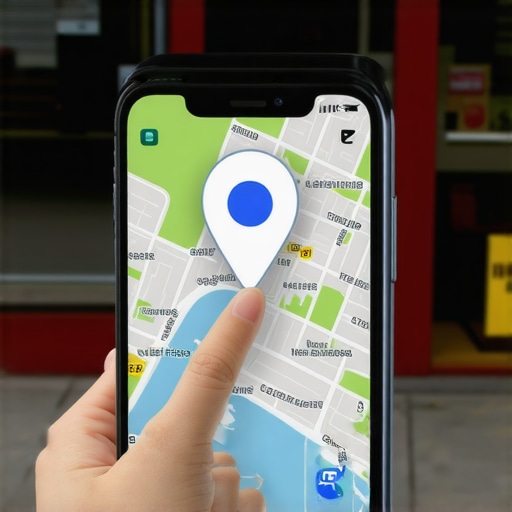
I sit in my small office with the sharp scent of peppermint and the smell of old paper from yellowed ledgers. I have watched this town change for twenty years. I see honest merchants struggle while ghosts of dead businesses haunt the digital streets. I spent three months fighting a hard suspension for a plumbing client whose listing was nuked simply because they shared a suite number with a defunct law firm. Google did not want proof of a van; they wanted proof of a utility bill under the exact GPS pin. It was an exhaustive war against an algorithm that saw a phantom where a thriving business stood. This is the reality of the hyper-local layer where a single mismatched digit can bury your livelihood. We must treat every business listing as a proximity beacon in a spatial database. Address rentals and keyword-stuffed names are a plague. Real local search is about the physics of a three mile radius shift and the forensic trace of a service area polygon. If you want to survive you must learn to purge the spirits of locations past.
The ghost in the GPS coordinates
Ghost listings happen when old business data persists in the local search index creating a conflict with current merchant signals. This digital haunting occurs because Google prioritizes historical trust over new entries. When a business closes the physical location does not always clear from the Map Pack database. This leads to a merged profile mess where your new shop is hidden by the reputation of the previous tenant. You might find your visibility tanking because the algorithm believes you are a duplicate of a defunct dry cleaner. To fix this you must initiate a gmb audit and ranking toolkit approach to identify every mention of the old entity. It is about sorting the signal from the noise to ensure your NAP data is the only one the proximity algorithm sees. You need to understand that why old location data still haunts your local map ranking is often tied to hidden citations on obscure directories. These old records act as anchors that pull your current ranking down into the filter. The local seo services to clean up old or closed locations focus on removing these anchors one by one. It is a slow process of proving to the machine that the past is dead.
Why your physical address is a liability
Mismatched business address details and incorrect suite numbers create a trust gap that triggers hard suspensions in the Map Pack. In my years of investigating map spam I have seen how virtual offices and coworking spaces trigger google business profile recovery service after fake address suspension protocols. The algorithm expects a LocalBusiness entity to have a unique footprint. If your suite number was once used by ten other failed businesses you are already at a disadvantage. You must use services to fix mismatched business address and phone number errors before the suspension hits. Google treats an address not just as a place to mail a postcard but as a centroid for a proximity radius. If that centroid is shared with a closed location the trust score collapses. It is a mathematical certainty that why your new address triggered a ranking drop and how to reverse it involves scrubbing the Map Maker history of that specific building. I have seen service area businesses get flagged because their home address was previously a registered office for a defunct corporation. The seo services to fix gmb hard suspension for service area business are built to untangle these web of associations. You cannot just change your address in the dashboard and expect the ghosts to vanish. You have to provide the forensic proof of your presence.
“Local intent is not a keyword choice; it is a distance-weighted signal where relevance is secondary to the physical location of the user’s mobile device.” – Map Search Fundamental
The three mile radius that determines your revenue
Local search visibility depends on the mathematical weight of your proximity to the user and the density of competing pins. The Vicinity update changed the game by shrinking the reach of high-authority listings to favor physical closeness. If a ghost listing is closer to the searcher than you are it might still take up a Map Pack slot even if it is marked as closed. This is why why being the closest business doesnt guarantee a map pack spot if the algorithm is confused by duplicate listings nearby. You must use local seo services to fix gmb issues caused by virtual office or coworking space to ensure your pin is the only valid beacon. The physics of a 3-mile proximity radius shift means that even a small error in your GPS coordinates can push you outside the searcher’s intent window. I often see businesses lose leads because their map pin is placed at the back of a building where the Google car could not verify the storefront. This is where the subtle profile move that pushes your pin above established local rivals comes into play. It involves refining the latitude and longitude data within your JSON-LD to match the exact entrance of your shop. You are fighting for a proximity beacon status and you cannot win if you are sharing space with a phantom.
How to scrub the digital footprint of a dead business
Removing old location data requires a systematic purge of third-party citations and the submission of direct closure evidence to Google. You cannot just hope the ghosts go away. You must use a toolkit to increase local leads from google maps that includes a citation cleanup phase. This means finding how to purge old or closed locations from search results by contacting the sources of that data. I have found that why automated citation tools often make your local seo worse is because they do not understand context. They often recreate the ghost listing you are trying to kill. You need the citation cleanup move that restores local map visibility which involves manual outreach to Yelp, Bing, and Apple Maps. I sit with my peppermint tea and draft emails to these directories because I know why business hour inconsistency is a major trust signal killer. If a dead business shows opening hours at your address Google will assume you are a duplicate. You must scrub inconsistent nap data from old web directories to prove you are the sole occupant. It is a strategic clean up removing duplicate pins without losing authority. This is the only way to reclaim your map presence after a major rebrand or a move. The past must be erased for the present to rank.
Local Authority Reading List
The verification loops that kill honest merchants
Google uses automated verification loops that often flag legitimate business moves as suspicious activities leading to profile suspensions. I have seen the google business profile recovery service after fake address suspension become a necessity for even the most honest shops. When you move to a new location you trigger an algorithmic audit. If the previous tenant did not close their listing properly the system sees two businesses at one spot and suspends both. You must understand how to prove your business is real during a hard suspension appeal by providing video verification of your permanent signage and utility bills. The recovering features on a shadowbanned google business profile is a technical challenge that requires gmb profile reinstatement services. Google does not trust you by default. They trust the historical data of the address. This is the simple logic behind why google suspends high performing profiles. They are looking for mismatched signals. If your website speed drops or you have a mismatched phone number error on local citations the system assumes you are a lead gen spammer. You need the suspension survival kit to navigate these loops. I have spent many nights helping people get their business profile back after a hard suspension hit because the machine is cold and lacks local context.
Why Google distrusts your current storefront
Trust in local search is built through consistent data signals across the entire web and high-quality interaction metrics from real users. While some say consistency is a myth I know that trust is everything in local search. If Google sees a ghost listing at your address with five stars and you have zero they will prefer the dead business. You must use seo services to fix keyword stuffing and content issues that might be making your GMB profile look like a fake entity. The algorithm looks for local justification triggers like customer photos and reviews that mention specific services. I have found that why google prefers profiles with high interaction over high review counts is because interaction data is harder to fake. You should focus on turning your map clicks into actual phone calls without buying more reviews. This involves the strategic way to use photos for better map pack placement. If you take a photo of your storefront and it includes the street sign the image metadata serves as a proximity signal. It proves you are not a virtual office. This is how you rebuild trust after a local ranking drop. You must show the search engine that your physical reality matches the digital pin. Without that alignment you are just another ghost in the GPS.
“Local search ranking is a forensic battle where the merchant who provides the clearest proof of physical existence wins the centroid.” – Spatial Database Weekly
The forensic path to a clean map pin
Correcting local search invisibility requires a forensic audit of all map assets and the consolidation of fragmented business data. You must start with the zero fluff checklist for fixing a merged listing disaster. First you must remove duplicate listings that are stealing your map authority. This often requires the pro guide to consolidating multiple gmb profiles without data loss. If you have limited functionality on your dashboard you may be suffering from a partial account suspension. You must restore traffic after your website takes a hit by ensuring your landing pages align with your map pin. Using how city landing pages pull real map clicks from ten miles away can help expand your reach once the ghosts are gone. You need to clean up citations without paying for expensive monthly tools by focusing on the top 50 directories. This is the messy citation cleanup move that saved a local brand from search invisibility. You must be relentless. I have seen rivals with fewer reviews still outrank you in the map pack because their data footprint is cleaner. Use the essential local seo toolkit for higher map rankings to monitor your progress. The goal is local brand clarity. When the algorithm sees a clear signal without any ghosts it will reward you with the leads you deserve. It is about stabilizing your local rank with clean backlinks and accurate opening hours history. Once the purge is complete your map position will finally stick.