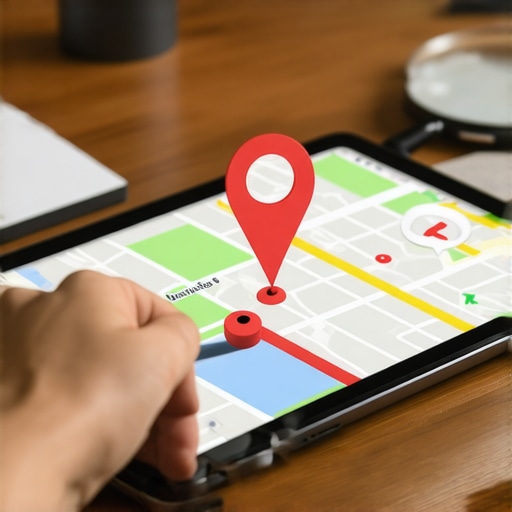
I have spent twenty years walking the digital streets of our local economy. I smell the peppermint on my desk and the old paper of city records. My desk is cluttered with maps that reveal the hidden grid of the local algorithm. I once spent three months fighting a hard suspension for a plumbing client whose listing was nuked simply because they shared a suite number with a defunct law firm. Google did not want proof of a van. They wanted proof of a utility bill under the exact GPS pin. This is the reality of the hyper-local layer. It is a world where a single mismatched digit in a phone number can collapse your proximity beacon. When I see national chains pretending to be local merchants, it irritates me. They do not understand the math of the centroid or the logic of a check-in signal. They think a citation blast to dead directories will save them. It will not. True authority is built through spatial precision and forensic data integrity. You must view your business listing as a proximity beacon in a complex spatial database. If you fail to respect the physics of the three mile radius, your revenue will vanish into the filter. This guide examines the microscopic reality of map rankings and the behavioral zooming required to survive the next algorithm shift.
The danger of mixed listings for multi location brands
Mixed listings and duplicate profiles occur when a Google Business Profile shares identical NAP data or GPS coordinates with another entity. This triggers the Possum filter, hiding your location from the Map Pack to prevent search result clutter for users seeking unique local service options. It is a common problem for those seeking seo services to fix mixed listings for multi location businesses. I have seen companies expand too quickly and leave a trail of data ghosts. When two offices are within the same zip code, the algorithm often chooses one to represent the cluster. The other becomes a ghost listing. You must audit your internal data before the algorithm decides for you. The math of the filter is cold. It looks for proximity overlap. If your pins are too close, one will be suppressed. I recommend a total forensic audit of your branch data. Use the guide to consolidating multi-location local profiles to merge redundant data points before they poison your main account. Do not let a legacy footprint from a previous tenant destroy your current authority. I have seen rankings flatline because an old dry cleaner at the same address never closed their profile. You are fighting for a limited number of pixels on a mobile screen. Every duplicate is a leak in your conversion funnel. Clean your data or get comfortable with invisibility.
Why your physical address is a liability
Physical addresses act as anchor signals for local search rankings, but using virtual offices or coworking spaces often triggers manual actions or profile suspensions. Google requires a permanent physical presence with branded signage and staffing during stated business hours to maintain proximity trust. Many owners think they can rent a mailbox and win. They are wrong. I have investigated hundreds of these cases. The spam team has a database of every Regis and WeWork location in the country. If you try to rank there, you are already behind. You need seo services to fix gmb issues caused by virtual office or coworking space to navigate these waters. Often, the solution is proving your service area status instead of clinging to a fake pin. I tell my clients that a real address is like a foundation of a house. If it is made of sand, the whole structure falls. If you have moved recently, you must follow how to manage local ranking shifts during a business move to keep your momentum. The algorithm tracks the forensic trace of your business existence. It looks for utility bills, incorporation papers, and even the street view imagery of your front door. If the Google car sees a generic office building with no sign for your brand, your trust score drops. I have seen businesses lose decades of reputation over a simple address verification error. You must be precise. You must be real.
“Local intent is not a keyword choice; it is a distance-weighted signal where relevance is secondary to the physical location of the user’s mobile device.” – Map Search Fundamental
The three mile radius that determines your revenue
Proximity radius shifts occur when Google Maps adjusts the search perimeter based on user density and competitor saturation for specific keywords. Your map visibility is limited by the physical distance between the searcher’s mobile device and your verified business pin at the time of the query. You might rank at number one when you are standing in your lobby, but move three blocks away and you disappear. This is the proximity shift. To combat this, you need local seo services to stabilize volatile map rankings after expansion. The algorithm uses a distance-weighted signal. It prioritizes the nearest solution to the user. If your competitors have more interaction data, their pin becomes stickier. You can see why your competitors’ map pin is stickier than yours by looking at their engagement metrics. It is not just about having the address. It is about proving you are the most relevant result for that specific coordinate. I often use the simple toolkit that found our most profitable gmb keywords to map out where the drop-off happens. If your ranking stops at the city border, you have a signal gap. You need to push your authority outward through localized content and niche citations. I have seen small shops outrank big boxes simply because they had better geo-tagged image data from their customers. Every photo taken at your location is a proof of life for the algorithm. It is a mathematical vote in your favor.
Local Authority Reading List
- Advanced Local SEO Strategies for 2025
- The Map Pack Placement Blueprint
- Navigating Insider Map Algorithms
- Mastering GMB Optimization Tactics
- Expert Tips for GMB Domination
The forensic trace of a service area polygon
Service Area Businesses or SABs must define a service area polygon in their Google Business Profile to signal their operational reach without a public physical storefront. Google evaluates the consistency of local signals within this geographic boundary to determine ranking eligibility for home service keywords like plumbing or roofing. If you do not have a storefront, you are judged differently. The algorithm looks at your history of reviews from specific neighborhoods. If all your reviews come from one side of town, you will not rank on the other side. This is why you need the path to clean listings after using aggressive lead gen tactics if you have been trying to game the system. I have caught many agencies using fake residential addresses to create a mesh of pins. Google is smarter than that now. They look for the behavioral patterns of your workers. Do your service vans actually go to those areas? The integration of POS data and local justification triggers is the new frontier. If a customer searches for a water heater and you just finished a job two streets away, you are more likely to appear. This is real-time proximity. You can use the interaction metrics that actually matter for small business growth to see how these signals stack up. Stop focusing on junk backlinks. Start focusing on geographic proof. I have seen listings get stuck in the filter because they claimed a 100 mile radius. That is a red flag. Keep it tight. Keep it real. Keep it local.
The math of local justification triggers
Local justifications are snippets of text that appear in Map Pack results, pulled from reviews, website content, or Google Posts to match user intent. These justifications serve as trust signals that increase click-through rates and proximity relevance for specific long-tail search queries. When a user sees a bolded phrase saying their website mentions this service, that is a justification trigger. You need seo services to fix schema and structured data errors to ensure the engine reads your site correctly. If your JSON-LD is broken, the algorithm cannot verify your offerings. I have seen profiles jump from page four to the top three just by fixing a category error. Check the simple fix for conflicting business category data to see if you are confusing the bot. Your primary category is the most vital decision you make. If you choose correctly, you double your leads. If you choose poorly, you are invisible. I also recommend scrubbing historic citation spam without deleting your real reviews. Old, messy data from 2012 is still out there, whispering lies to the search engine. It says your business name is different or your phone number is wrong. You must silence those ghosts. Every piece of data about your business online must be a perfect mirror of your Google profile. Consistency is not a myth. It is the bedrock of trust. I have spent my career cleaning up the mess left by bad agencies. Do not be another victim of their shortcuts.
“The proximity of the searcher to the business remains the number one ranking factor for the local pack, often overriding traditional organic signals.” – Vicinity Research Group
The hidden move that turns profile views into real phone calls
Conversion optimization for Google Business Profiles relies on interaction signals such as calls, direction requests, and booking clicks to demonstrate market authority to the ranking algorithm. Profiles with high engagement-to-impression ratios often see upward rank mobility even against competitors with more backlinks or higher review counts. It is about the quality of the signal. If people look at your profile and leave, Google notices. If they call you, Google rewards you. You need to know the hidden move that turns profile views into real phone calls. It is often as simple as having better photos or a clearer description of your services. I suggest using the gmb audit checklist that actually moves the needle to find your weak points. Most people ignore their interaction data. They look at the rank and ignore the behavior. That is a mistake. Use how to use interaction data to boost your map position to understand the loop. The algorithm wants to provide the most helpful result. If users interact with you, you are helpful. I have seen profiles with ten reviews beat those with a hundred because the ten-review profile had a 20 percent higher click-through rate. The data does not lie. It reveals the true heart of the neighborhood. I have fought for my clients because I believe in the power of the local merchant. The big chains have the money, but we have the ground truth. We have the pins that belong here. We have the history that they can never buy. Stop chasing the algorithm and start serving the searcher. The rest will follow. I have seen it a thousand times. The pin moves because the people moved it.