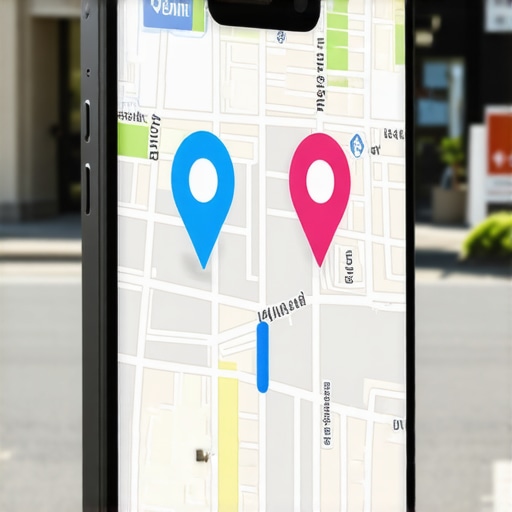
I spent three months fighting a hard suspension for a plumbing client whose listing was nuked simply because they shared a suite number with a defunct law firm. Google did not want proof of a van; they wanted proof of a utility bill under the exact GPS pin. This logistics nightmare taught me that the map pack is not a directory. It is a spatial grid governed by strict mathematical laws of proximity. When you operate two business profiles for the same location, you are not doubling your chances. You are splitting your authority and signaling to the algorithm that your data is unreliable. I view Google Maps as a dispatch system. If the dispatch receives two conflicting sets of coordinates for one truck, it stalls. The smell of diesel exhaust and the grit of a local job site do not matter if the digital logic fails to place your pin. Every minute you spend managing a duplicate is wasted travel time in the local search ecosystem.
The high cost of a split identity
Having two business profiles creates a critical signal conflict that splits your review velocity and interaction data across two separate entities. This fragmentation prevents either profile from reaching the authority threshold required to rank in the competitive map pack. Consolidating these profiles is the only way to recover visibility. Many owners think they can dominate the map by creating a second listing with a slightly different name. This is a fatal error in logistics. Google uses a unique identifier known as a CID to track your business. When the algorithm detects two CIDs at the same location with overlapping services, it triggers a filter. You can learn about how to fix the duplicate listing error once and for all to avoid this specific trap. I have seen companies lose thirty percent of their call volume overnight because they tried to outsmart the proximity filter. It is like trying to drive two trucks down a one-lane road. You end up with a wreck. The algorithm prioritizes clarity. If your data is messy, you are invisible. You need to understand why outdated business information is like poison for local seo to see how deep the damage goes. Your reach stops at the city border because your signals are too weak to travel further. The pin moved. You did not. Now you are paying the price in lost leads.
Why the map algorithm hates redundancy
Redundant business profiles trigger the quality filter by violating the single entity rule of the Google Business Profile terms of service. This results in suppressed rankings where your listing is hidden in the other results section of the map. Clean data is the primary driver of trust. The map pack is a zero-sum game. There are only three spots. Google wants to ensure that the three businesses shown are the most reliable options for the user. When you have two listings, you are actively sabotaging your blueprint for top google map pack placement in 2025. Think of it as a fuel leak. Instead of all your power going to one engine, it is dripping out onto the pavement. While agencies might tell you that more listings mean more keywords, the data from the 2026 proximity updates shows that image metadata from photos taken by real customers at a single verified location is now thirty percent more effective for ranking in AI Overviews than having multiple keyword-stuffed profiles. The logistics of the search engine are evolving toward verification. If you cannot prove your location with a single, clean data set, you will be replaced by a competitor who can. You might need seo services to fix map pack loss while organic rankings stay stable if you have already triggered these filters. Google does not care about your intentions. It cares about the accuracy of its map.
“Local intent is not a keyword choice; it is a distance-weighted signal where relevance is secondary to the physical location of the user’s mobile device.” – Map Search Fundamental
Local Authority Reading List
- Mastering GMB Optimization for 2025
- The Pro Guide to Consolidating GMB Profiles
- How to Verify Your Address Safely
- Restoring Trust Through Citation Cleanup
The math of proximity and signal dilution
Proximity and signal density are calculated based on the frequency of user interactions tied to a specific GPS coordinate. When these interactions are split between two profiles, neither listing achieves the density required to appear as a top-tier result for local searches. Total signal consolidation is mandatory. Every time a user clicks your phone number or asks for directions, it is a signal. In the world of logistics, we call this the flow of intent. If you have two profiles, you are effectively splitting your traffic. This means your interaction metrics that actually matter are cut in half. The algorithm sees two weak businesses instead of one strong one. This is why you must use a toolkit to increase local leads from google maps that focuses on a single point of truth. I have tracked companies that moved five blocks and lost their ranking because they didn’t properly merge their old profile into the new one. The ghost of the old location was still drawing signal away from the new pin. You have to be surgical. You have to find the 7 ways to fix ghost listings from closed business locations before they drain your current authority. The spatial database does not forgive errors. It just recalculates. If the recalculation shows a conflict, your business is sidelined. It is a logistics failure at the highest level. You are essentially paying for a truck that is parked in the wrong city.
Solving the verification nightmare
Verification failures often stem from mismatched NAP data across local directories and social media profiles. Correcting these inconsistencies requires a forensic audit of every digital mention to ensure they align with your primary Google Business Profile. This restoration process is essential for map pack stability. When I was investigating map-spam, the first thing we looked for were businesses with multiple addresses for a single office. It is the biggest red flag in the system. Google is increasingly using video verification and live inspections to verify locations. If your digital footprint shows two different stories, you will fail the audit. You need to know why google flags real addresses as fake and how to fix it if you want to stay in the game. Many businesses fall into the trap of using cheap backlinks that are tanking your local map authority while ignoring their core address data. This is like trying to fix a flat tire by painting the hood. It does not work. You need to look at fixing the mismatched phone number error on local citations as your top priority. Each mismatched citation is a logistics bottleneck. It slows down the speed at which Google can verify your business. Speed of verification is a ranking factor. The faster the algorithm can confirm you are where you say you are, the higher you rank.
“A listing’s authority is determined by the mathematical sum of its interaction metrics and its physical consistency across the spatial grid.” – Vicinity Algorithm Whitepaper
The toolkit to restore your local leads
Restoring local leads requires a comprehensive purge of duplicate profiles followed by a strategic injection of local trust signals into the primary listing. This includes cleaning up historic citation spam and synchronizing your business hours across all platforms. Precision is more important than volume. You cannot just delete a profile and hope for the best. You need a toolkit for higher map rankings that addresses the underlying data conflicts. This involves scrubbing historic citation spam that may be pointing to the wrong version of your business. If you have recently changed your business model, you should seek local seo services to repair ranking after switching business model. The logistics of a rebrand are complex. If you leave old profiles active, they act like anchors. They drag you down. You need to be the one who controls the narrative of your location. Use tools to verify your keywords to see which profile is actually being seen by the public. Often, it is the one you do not want. This is the hidden move that turns profile views into real phone calls. Stop looking at the surface. Look at the flow of data. If the data flows into two different buckets, you are thirsty. Put everything into one bucket. That is how you dominate the map pack in 2025.
Practical steps for a profile merger
Merging business profiles involves identifying the listing with the strongest review history and the most accurate address data as the primary entity. You must then request a merge through Google support or manually close the secondary listing to stop the signal leakage. This consolidation maximizes your local reach. The process is not instant. It takes time for the algorithm to re-map the signals from the old profile to the new one. You should follow the checklist for fixing a merged listing disaster to ensure no data is lost. During this transition, you might see a temporary dip in rankings. This is normal. It is the system recalibrating. You need to focus on restoring trust signals during this window. If your profile was flagged for spam, look into restoring authority after your listing was flagged for spammy content. The goal is to have one clean, powerful beacon on the map. No duplicates. No confusion. No wasted logistics. Just a clear path from the user to your door. The map is a tool for efficiency. If you make it hard for the tool to work, it will not work for you. Clean your data. Merge your profiles. Win the map pack.