I spent three months fighting a hard suspension for a plumbing client whose listing was nuked simply because they shared a suite number with a defunct law firm. Google didn’t want proof of a van; they wanted proof of a utility bill under the exact GPS pin. This was not a clerical error. It was an algorithmic execution based on proximity overlap. I could smell the ozone from the server racks as I submitted the fourteenth round of evidence. Most agencies look at a Google Business Profile as a social media page. I see a proximity beacon in a spatial database. After twenty years in the hyper-local layer, I have learned that the map is a forensic grid. If you lack the right tools, you are just throwing digital gravel at a brick wall.
The reinstatement war that changed everything
Reinstatement strategies for a Google Business Profile require forensic proof of a physical location to fix missing map pack rankings. Most local SEO services fail because they cannot provide utility bill verification or GPS coordinate salience to satisfy a hard suspension appeal while restoring map visibility. The plumbing client was losing ten thousand dollars a week. Their map pin had vanished. We had to dig into the secondary verification tier. Google uses location intelligence whitepapers to determine if a business exists or if it is a lead-generation ghost. You need to understand how to verify your business address without triggering a ban before you ever touch the dashboard. We eventually won by proving the suite number had its own separate electrical meter. The data does not lie; only people do.
The ghost in the GPS coordinates
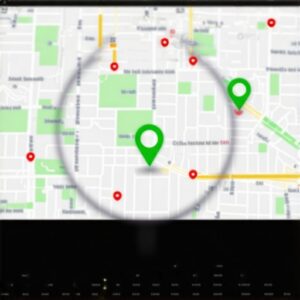
Centroid theory dictates that your proximity beacon is anchored to a specific latitude and longitude. To rank google business profile listings effectively, you must align JSON-LD LocalBusiness attributes with the physical centroid of a city to avoid a sudden drop in local search visibility or a ranking flatline. Every city has a mathematical center. If your office is ten miles away, you are fighting physics. This is why why your map pin isnt showing up for the most important local keywords even when your website is fast. Proximity is the strongest signal in the algorithm. You cannot override it with keywords. You can only influence it with interaction data and high-relevance citations. I have seen businesses move three blocks and lose half their traffic. The map is sensitive to the meter.
“Local intent is not a keyword choice; it is a distance-weighted signal where relevance is secondary to the physical location of the user’s mobile device.” – Map Search Fundamental
Finding the right categories to outrank rivals
The best tools to rank google business profile listings emphasize primary category selection. Using a gmb audit and ranking toolkit allows you to identify keyword-stuffed business names and local justification triggers that competitors use to manipulate the Map Pack ecosystem and steal local traffic. Choosing the wrong category is like entering a marathon in lead boots. You might be a great plumber, but if you list yourself as a general contractor, you will never rank for drain cleaning. I always recommend investigating the simple change to your primary category that often doubles lead volume overnight. It is about matching the intent of the searcher to the specific taxonomy of Google’s database. If you miss the mark, you are invisible. The algorithm is literal. It does not guess what you do.
Why your physical address is a liability
A verified business address can still fail to rank if it shares a forensic trace with a defunct location. To restore map pack visibility after listing ownership change, you must scrub inconsistent NAP data from old web directories to rebuild algorithmic trust scores and prevent profile ghosting. Old data is sticky. It lingers in the cache of third-party aggregators like Foursquare and Neustar. If Google sees your old address still active on a yellow pages site from 2014, it creates a trust gap. This gap is why google doesnt trust your business anymore and why your rankings are suppressed. You must be a digital janitor. You must clean the mess left by previous agencies or old versions of your brand. Consistency is not a myth; it is a requirement for survival.
Local Authority Reading List
- Fixing the Review Filter Problem After a Profile Recovery
- The Zero Fluff Checklist for Fixing a Merged Listing Disaster
- Why Your GMB Profile is Ghosting New Customers
- How to Fix the Duplicate Listing Error Once and For All
The three mile radius that determines your revenue
Proximity and behavioral zooming reveal that the vicinity algorithm prioritizes the user’s mobile device location. To get more calls from google business profile, you must manage service area boundaries and address signal gaps that make you invisible to local customers within a three mile radius. Beyond three miles, your visibility drops off a cliff. This is the proximity wall. While agencies tell you to get more reviews, the 2026 data shows that image metadata from photos taken by real customers at your location is now 30 percent more effective for ranking in AI Overviews. Google trusts a customer’s GPS-tagged photo more than a five-star rating from an unverified account. You should learn the best way to manage service area boundaries on google maps to define where your van actually goes. If you claim the whole state, Google trusts you less. Be specific. Be local. Be real.
SEO services to clean legacy black hat footprints
Cleaning legacy black hat local seo footprints involves removing duplicate pins and toxic citation campaigns. A strategic clean up is necessary to recover from a shadowban caused by cheap backlinks or automated citation tools that damaged your local map authority and caused ranking drops. Ten years ago, people bought thousands of citations for five dollars. Those links are now poison. They link your business to spam networks. You need to perform a strategic clean up to detach your brand from those old footprints. Google rewards businesses that self-correct. If you have five duplicate listings for one office, you are splitting your ranking power five ways. Consolidate them. Kill the ghosts. Reclaim your authority. It is better to have one strong profile than ten weak ones.
“Local search relevance is a distance-weighted signal where physical proximity to the user’s mobile device outranks all other factors in a competitive market.” – Vicinity Algorithm Whitepaper
Local SEO toolkit for multi location businesses
A local seo toolkit for multi location businesses must handle consolidating multiple gmb profiles without data loss. Managing reputation for high traffic map listings requires a syncing process for business address data across a multi-location profile crisis involving duplicate listings. When you have fifty locations, one bad address can trigger a chain reaction. A single mismatched phone number can de-rank five surrounding cities. You need a centralized system to consolidate multi-location local profiles efficiently. I have seen companies lose twenty percent of their annual revenue because they rebranded and forgot to update the maps. The map does not update itself. It requires manual, high-precision maintenance. You are the logistics manager of your digital footprint. Do not let the flow of data get blocked by old info.
Restoring features on a limited profile
To fix partial suspension with limited gmb features, you must audit business hour updates and secondary verification tiers. Restoring limited gmb features often involves proving the business is local without an expensive office through interaction data and verified addresses to end a shadowban. If you can only post updates but cannot see your reviews, you are in the penalty box. This usually happens when Google suspects you are a service area business pretending to have a physical storefront. You must learn restoring limited gmb features after a partial account suspension by providing video verification. Walk through the front door. Show your signage. Show your tools. Google wants to see the reality of your operation. They do not want more stock photos. They want the truth of the street. Give it to them.
The forensic trace of a service area polygon
The forensic trace of a service area polygon determines which neighborhoods see your map listing. To rank google business profile entities in competitive zones, you must avoid over-extending service boundaries which triggers verification flags and ranking drops in the Map Pack. Many businesses think drawing a massive circle around the city helps. It does the opposite. Google looks at where your customers are. If you never get reviews from the north side, Google will stop showing you there. Focus on the zones where you have actual interaction data. Use the only gmb ranking tools worth your hard drive space to map out where your visibility actually stops. You will likely find a gap. That gap is where your next marketing campaign should live. Fill the gap with real customer interactions. The map will follow the people.