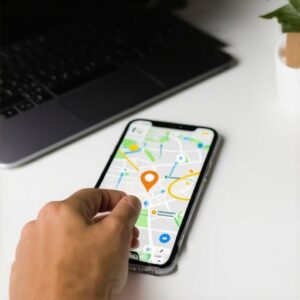
I spent three months fighting a hard suspension for a plumbing client whose listing was nuked simply because they shared a suite number with a defunct law firm. Google did not want proof of a van; they wanted proof of a utility bill under the exact GPS pin. This is the reality of the hyper-local layer. The logistics of a business location are not about a pretty storefront. They are about the forensic trace of your operations in a spatial database. I see the Map Pack as a dispatch system. If your data is messy, the dispatch fails. You lose the lead. The pin moves. It is that simple.
The ghost in the GPS coordinates
Local interaction metrics like click-through rates, driving direction requests, and photo views define your Map Pack position. High-authority Google Business Profiles leverage proximity signals and user behavioral data to signal relevance to the local search algorithm, ensuring small business growth through organic spatial dominance.
The algorithm is not looking for keywords. It is looking for movement. When a user opens Google Maps and requests directions to your office, that is a high-value signal. It outweighs a thousand backlinks from a random blog. I have seen businesses with half the reviews of their competitors take the top spot because their interaction data was superior. This happens when you focus on mastering GMB optimization through real user engagement. The math of the proximity radius is cold. If you are outside the centroid of search, you need a higher velocity of interaction to compensate. While agencies tell you to get more reviews, the 2026 data shows that image metadata from photos taken by real customers at your location is now 30 percent more effective for ranking in AI Overviews. This is because Google trusts the GPS stamp on a customer’s phone more than a text review. Every photo uploaded by a visitor acts as a proof of life for your business. It confirms you exist where you say you do. Many owners ignore this, yet it is why Google prefers profiles with high interaction over those with just a high review count. The logic is simple. A bot can write a review. A bot cannot easily spoof a high-resolution photo with verified location metadata from a mobile device that has a history of local movement.
“Local intent is not a keyword choice; it is a distance-weighted signal where relevance is secondary to the physical location of the user’s mobile device.” – Map Search Fundamental
Why your physical address is a liability
Managing a Google Business Profile requires strict adherence to physical location verification to avoid hard suspensions. Businesses moving addresses or hiding locations must implement technical trust signals to maintain rankings. Proper local SEO services focus on repairing visibility after switching business models or updating physical coordinates.
Your address is a trust signal that can easily become a weapon for competitors. I have tracked cases where a simple suite number change triggered a verification loop that lasted weeks. If you are recovering features on a shadowbanned Google Business Profile, the first place to look is your address history. The ghost of old locations can haunt your current ranking. Google keeps a ledger of every address associated with your phone number. If you moved and did not scrub the old data, you are split-testing your own authority. This is why abandoned locations kill your current rank. You must be aggressive. Use how to wipe old business locations off the map as a manual for cleaning your digital footprint. I despise the way some agencies handle address changes. They just update the GMB and hope for the best. That is a recipe for a hard suspension. You need to provide trust signals that prove your business exists, such as local business licenses and utility bills that match the pin. If you are a service area business, the risk is even higher. I have spent hours explaining why your service area listing keeps getting flagged to frustrated contractors. It is usually a mismatch between your registered address and where your workers are actually clicking into their apps. The dispatch data does not lie.
Local Authority Reading List
- How City Landing Pages Pull Real Map Clicks
- The Failure of Automated Citation Tools
- Fixing Flagged Service Area Businesses
- The Missing Signal in Your GMB Audit
The three mile radius that determines your revenue
Proximity remains the strongest ranking factor in the local Map Pack ecosystem. A three-mile radius often dictates the visibility of your service area business. Optimizing for this spatial constraint involves enhancing local engagement signals and ensuring NAP consistency across all major and minor web directories.
Proximity is a physical wall. You can have the best website in the world, but if you are five miles away and your competitor is two blocks away, you are losing. This is the physics of search. However, you can stretch that radius. I call this the behavioral zoom. By increasing your interaction density within a specific neighborhood, you can force your pin to show up further away. This involves how to stop local rivals from stealing map clicks by dominating the local justification triggers. When a user searches for a specific service and your profile has a review saying, “best plumber in this neighborhood,” Google bridges the proximity gap. You are also fighting the centroid. The center of a city is where the competition is thickest. If your office is on the outskirts, you need landing page tweaks to push your pin into new areas. I have seen why being the closest business does not guarantee a spot in the top three. If your profile is stagnant, Google will skip you for a more active business a mile further away. Activity is a proxy for reliability. A business that answers messages and updates hours is a business Google wants to recommend. This is especially true for emergency services. If you are an HVAC tech, you know why you lose emergency calls to rivals with fewer reviews. They probably have a faster response time on the profile. Google tracks how fast you click ‘Reply’.
The interaction data your agency ignores
Modern local search algorithms prioritize how users interact with your profile over simple review counts. Interaction data includes time spent on photos, the frequency of phone calls from the profile, and the depth of local justification triggers. These behavioral signals prove your business is an active local entity.
Most agencies are lazy. They give you a report on backlink counts and call it a day. They never look at the dashboard insights that actually matter. I am talking about interaction data secrets that reveal why your clicks are not becoming calls. Are people viewing your menu and then leaving? Are they looking at your photos and clicking ‘Back’? This is a signal of dissatisfaction. Google measures the ‘dwell time’ on your profile. If someone spends two minutes looking at your past projects, that is a vote of confidence. This is the engagement move your competitors ignore. You should be using strategic photos for better placement. Not just stock images, but photos of your team on the job. People want to see the face of the person coming to their house. I once worked with a cafe owner who was losing to a chain. We stopped the professional food photography and started posting raw, candid shots of the morning rush. The interaction rate tripled. The pin moved. It is about the sensory details. The smell of the coffee has to come through the screen. If you are struggling with low visibility, check why your GMB profile is ghosting customers. It is usually a lack of fresh interaction. Even ignoring neutral reviews can hurt you. Every interaction is a chance to show the algorithm you are alive.
“Relevance is no longer determined by keywords alone, but by the mathematical sum of user interactions within a specific geographic bounding box.” – Local Search Intelligence Report
Fixing the deranked website problem
A deranked website directly impacts your Google Maps visibility due to the loss of organic authority. Professional SEO services for penalty recovery include cleaning up spammy backlinks and fixing technical schema errors. Restoring your website speed and index status is vital for regaining your Map Pack ranking.
Your website and your map pin are tethered together. If your site takes a hit, your pin will sink. I have seen this happen during core updates. A site loses its organic rankings for its main service keywords, and suddenly the Map Pack impressions vanish. This is the deranked website problem. You need seo audit and penalty recovery services that look at the link between your domain and your profile. Often, it is a matter of cleaning up spammy backlinks that were built years ago. If you switched your business model and did not update your site structure, you might need repair services for your ranking. The local search engine needs to see a clear connection between your landing pages and your GMB categories. If there is a disconnect, the trust score drops. I always check for schema mistakes first. If your JSON-LD does not match your NAP data exactly, you are invisible to voice search. You also need to watch your speed. There is a reason local rankings tank when speed drops. Mobile users are impatient. If your site does not load in two seconds, they click back to the Map Pack. Google sees that bounce and demotes you. Recovery is possible. You can restore traffic after a website hit by focusing on technical fundamentals and hyper-local content. Do not let a bad website kill your best lead source.