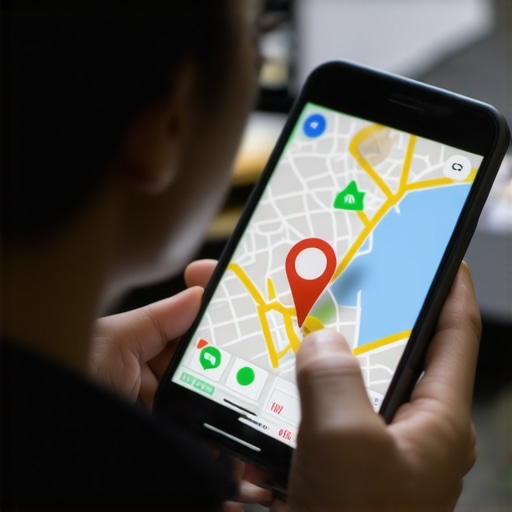
The Tiny NAP Mismatch That Keeps Your Map Pin From Showing Up
You’ve done everything by the book. Your business is verified, you’ve uploaded high-resolution photos of your team, and you’ve consistently gathered 5-star reviews from happy clients. Yet, when you search for your services in your own city, your business is nowhere to be found. You check the Map Pack, and there are competitors with fewer reviews, worse websites, and less experience sitting comfortably in the Top 3. It feels like your business is being “ghosted” by Google.
This “Map Pack Ghosting” phenomenon is one of the most frustrating experiences for modern business owners. You exist, you’re successful in the real world, but your digital pin only seems to appear if someone is standing in your parking lot. Why does Google refuse to show you to the rest of the city? The answer rarely lies in your reviews or your photos. Instead, it lies in the invisible “infrastructure” of your digital presence.
As expert Rashid Rehman often emphasizes, local SEO isn’t just a marketing layer you slap onto a business; “It’s infrastructure.” If the foundation of that infrastructure is cracked, the entire building – your rankings – will never reach the heights you expect. In 2025 and 2026, the most common “crack” in that foundation is a lack of name address phone consistency. Even a tiny mismatch can trigger a filter that buries your profile beneath your competitors.
What is NAP and Why Does 2026 Google Still Care?
NAP stands for Name, Address, and Phone number. For over a decade, google business profile seo experts have preached the importance of keeping this data consistent across the web. However, a debate has emerged in recent years. Some industry voices, including Darren Shaw, have suggested that the “volume” of citations (listings on random directories) matters much less than it used to. While this is true – Google is smart enough not to care if you aren’t listed on an obscure directory for local florists in another state – the consistency of your core data has actually become more vital as Google moves toward an AI-driven “Trust Filter.”
Google’s local algorithm is built on three pillars: Proximity, Relevance, and Prominence. While proximity is about where the user is, and prominence is about your brand’s authority, “Relevance” is heavily dependent on how much Google trusts the data it has about you. If Google’s crawlers find three different versions of your address or two different phone numbers, it creates “data friction.”
In the 2026 search landscape, Google prioritizes user experience above all else. If there is even a 1% chance that a user might show up at a closed location or call a disconnected number because of conflicting data, Google will simply “ghost” your pin to protect the user. They would rather show a slightly less relevant business with 100% data certainty than a highly relevant business with 80% data certainty. This is why nap consistency seo remains the bedrock of any successful local strategy.
The “Tiny” Mismatches That Trigger the Filter
Most business owners think they have consistent NAP because they haven’t moved in ten years. However, the “mismatches” Google looks for are often much more subtle than a completely different street address. These tiny discrepancies are what lead to a 6 Messy Citation Errors Keeping Your Business Profile Hidden From Search.
1. The Suite Number Trap
This is perhaps the most common error. On your Google Business Profile, you might be listed at “123 Main St, Suite 100.” But on Yelp, it’s “#100,” and on your Facebook page, it’s “Ste 100.” To a human, these are identical. To a database-driven algorithm looking for exact matches to verify the “Knowledge Graph” of your business, these are three different data points. Research from Prose Media (Research #1) indicates that Google struggles to associate listings with your business when data is fragmented, which directly reduces your local ranking strength.
2. The Phone Number Fracture
Many businesses use call-tracking numbers to measure their marketing ROI. While this is great for data, it can be a nightmare for local business seo. If your Google Business Profile has your primary landline, but your website and various local directories feature different tracking numbers, Google sees a fractured identity. The algorithm asks: “Which one is the real business?” When it can’t decide, it defaults to lowering your prominence.
3. Legal Name vs. Brand Name
Are you “Smith & Sons Plumbing,” “Smith & Sons Plumbing LLC,” or “Smith & Sons Plumbing – Emergency Services”? If you are inconsistent with your naming convention, you are diluting your brand equity. Google needs to see the exact same “Name” across the web to build a solid “Prominence” score. If you’ve been experimenting with keywords in your title on some platforms but not others, you might be accidentally triggering a Profile Shadowban Killing Your Local Search Traffic.
How NAP Inconsistency “Erodes” Your Rankings
To understand why this matters, you have to understand how Google builds its local index. Google doesn’t just look at your Google Business Profile (GBP); it cross-references that profile with “structured citations” (like Yelp, Yellow Pages, and Apple Maps) and “unstructured citations” (like mentions in local news articles, blog posts, and social media). When you engage in google business profile optimization, you are essentially trying to sync all these signals.
When Google finds conflicting data, it enters a state of “low confidence.” Think of it like a credit score. Every consistent mention of your NAP is like a positive payment on your credit report, raising your “Trust Score.” Every mismatch – an old phone number on an abandoned Foursquare page or a misspelled street name on a local chamber of commerce site – is a late payment. If your score drops too low, Google applies the “Ghost Filter.”
Research #4 from PriceWeber highlights that incorrect NAP can “dramatically impact rankings” in both the map pack and organic results. It isn’t just about the Map Pack; your organic website rankings can also suffer because Google isn’t sure if the website belongs to the physical entity it sees in the maps. This is Why Valid Business Addresses Still Get Buried by the GMB Ghost Filter even when the business is legitimate and active.
In 2026, Google’s AI is even more sensitive to these signals. As Noel Ceta (Research #5) noted after analyzing 100 profiles, outdated 2019 advice focusing solely on keyword stuffing no longer works. The modern algorithm is looking for “Infrastructure Integrity.” If your NAP is messy, your google business profile seo efforts are being built on quicksand.
The 20-Minute NAP Audit
If you want to rank google business profile listings effectively, you need to perform a manual audit at least once a year. You don’t need a massive budget to start; you just need twenty minutes and a keen eye for detail.
- The “Phone Quote” Search: Go to Google and search for your primary business phone number in quotes (e.g., “555-0199”). Look through the first three pages of results. Are there any old listings with the wrong address? Any listings with a slightly different business name?
- The “Old Address” Search: If you have moved in the last five years, search for your old address. If listings still exist with that address associated with your business name, you have a major conflict that is likely suppressing your current rankings.
- Use Professional Tools: Manual searching only goes so far. To truly understand how Google perceives your location, use local seo tools to track where your pin actually drops across a grid of your city. This helps you see if your ranking “radius” is being artificially choked by data conflicts.
Once you identify the errors, the cleanup process begins. This involves claiming old profiles and updating them to match your current GBP exactly. This is a core part of any local map pack seo strategy. If you’re struggling with a sudden drop in visibility, check out these 4 Expert Map Ranking Fixes for 2026 Grid Drops.
Automation and Professional Fixes
For a single-location business, manual cleanup is tedious but doable. However, for multi-location businesses or agencies managing dozens of clients, it is a logistical nightmare. This is where local seo software and specialized services become essential. Managing google business profile optimization at scale requires a systematic approach to citation suppression and data syncing.
If you are serious about your digital growth, you might consider a google maps ranking service. These services don’t just “build links”; they clean the “data pollution” that surrounds your brand. By using a google maps rank tracker, you can see the direct correlation between fixing a batch of inconsistent citations and the expansion of your ranking heat map. When the data is clean, Google has the confidence to rank in google map pack positions that were previously out of reach.
Remember, Google wants to show the best businesses. By fixing your NAP, you are simply removing the technical reasons Google has for ignoring you. You are making it “easy” for the algorithm to trust you. For more advanced strategies, you can also explore 7 Google Business Profile Tips for 2026 That Beat the New Algorithm.
Conclusion: Fix the Foundation to Scale the Rankings
NAP consistency might not be the “sexiest” part of SEO. It doesn’t involve flashy AI content or viral social media posts. However, it is the fundamental infrastructure upon which all your other marketing efforts sit. You cannot build a skyscraper on a cracked foundation, and you cannot improve google maps ranking results if Google isn’t 100% sure where you are or how to contact you.
Fix the data first. Ensure your Name, Address, and Phone number are identical across the digital landscape. Once the “Trust Filter” is satisfied, your reviews, photos, and posts will finally have the impact they deserve. Perform a citation audit today – your Map Pack ranking depends on it.