The Review Paradox: Why Your 200+ Reviews Aren’t Saving Your Rankings
It is a scene I see played out weekly in the chiropractic industry. A clinic owner – let’s call him Dr. Miller – sits in his office, opens his smartphone, and types “Chiropractor near me” into Google. Dr. Miller has been in practice for fifteen years. He has 247 five-star reviews, a beautiful website, and a wall full of community awards. Yet, when the results load, he isn’t in the top three. Instead, the #1 spot in the local map pack is occupied by a clinic that opened eighteen months ago, has only 15 reviews, and a website that looks like it was designed in 2012.
Dr. Miller is frustrated. He feels the system is rigged. He’s done everything the “experts” told him to do: “Get more reviews,” they said. “The one with the most stars wins,” they promised. But in the 2025/2026 local search landscape, that advice is not just outdated – it’s dangerously incomplete. As an AI SEO Expert and the Founder of Local Grow 360, I have spent years dissecting the mechanics of the Google Map Pack. I’ve helped healthcare professionals, from surgeons to chiropractors, dominate their local markets by moving past vanity metrics and focusing on what actually moves the needle.
The truth is that while reviews are a vital trust signal for conversion, they are only one of over 100 ranking factors in Google’s complex algorithm. If you are losing to a competitor with a fraction of your social proof, it is because you have “Signal Gaps.” Your competitor isn’t luckier than you; they are accidentally (or intentionally) providing Google with higher Signal Density in the areas that matter most: Proximity, Relevance, and Interaction. In this guide, we are going to tear down the review myth and look at the technical google business profile seo strategies you need to reclaim your rightful place at the top.
Proximity vs. Popularity: The 3-Block Disappearance
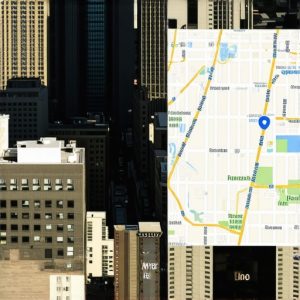
The most powerful and frustrating ranking factor in local SEO is the Proximity Filter. Google’s primary goal is to provide the most convenient solution to the searcher. If a patient is standing three blocks away from a competitor’s office and searches for a chiropractor, that competitor has a massive “natural” advantage, regardless of their review count. This is what I call the “Ghost Effect” – the phenomenon where your business simply disappears from the map the moment a customer drives a few blocks away from your front door.
In my work at Local Grow 360, I’ve seen practices with incredible authority lose out because they haven’t optimized for their “Grid Signal.” Google views the world in a series of coordinates. If your google maps rank tracker shows you ranking #1 at your office but dropping to #10 just a mile away, you are suffering from a proximity chokehold. You can learn more about this specific phenomenon in my deep dive on Why Your Business Disappears the Moment a Customer Drives Three Blocks Away.
To combat this, you cannot simply rely on reviews. You must expand your “Relevance Radius.” If a competitor is 0.5 miles closer to the searcher, their 10 reviews might beat your 200 because Google deems them the “most relevant” based on physical distance. However, you can overcome this distance gap by increasing your signal density through localized content and “Hyperlocal Citations” that prove to Google you serve the entire city, not just your immediate street corner. Using professional local seo tools like SEO Viper Tools allows you to visualize this grid and see exactly where your “authority” ends and where your competitor takes over.
Beyond “Chiropractor”: How Category Squatting Kills Your Reach
The second pillar of google business profile ranking is Relevance. Many chiropractors make the mistake of “Category Squatting.” They set their primary category to “Chiropractor” and then forget about it. Meanwhile, the competitor who is outranking them has meticulously filled out their secondary categories and service menus.
Google uses these categories to match searcher intent. If someone searches for “sciatica treatment” or “sports injury clinic,” and you only have “Chiropractor” listed, you are forcing Google to guess if you provide those services. The competitor with 15 reviews who has “Physical Therapy Clinic” and “Massage Therapist” as secondary categories will likely outrank you for those specific, high-intent searches. This is a classic example of how The Specific Category Choice That Cuts Your Local Map Reach in Half can undermine even the most established practice.
To fix this, your google business profile optimization must include a comprehensive service menu. Don’t just list “Adjustments.” List “Prenatal Chiropractic,” “Pediatric Chiropractic,” “Spinal Decompression,” and “Cold Laser Therapy.” Each of these acts as a “keyword hook” that catches searches your reviews alone cannot reach. When Google’s AI (Gemini) crawls your profile, it looks for these specific markers to determine if you are a match for the user’s specific pain point. If you aren’t using local seo software to audit your categories against the top-ranking competitors, you are essentially flying blind.
Why “Clicks to Call” Beat “Stars” in the New Algorithm
This is the most technical and arguably the most important shift in local map pack seo for 2025 and 2026: Interaction Signals. Google has moved away from static data. It no longer cares as much about how many reviews you have; it cares about how people interact with your profile now.
According to my analysis of the current local algorithm trends, Google tracks behavioral data such as:
- Click-Through Rate (CTR): How many people see your profile and actually click it?
- Dwell Time: How long do they spend looking at your photos or reading your updates?
- Direction Requests: How many people are actually asking for a map to your office?
- Review Recency: Ten reviews from last month are worth more than 100 reviews from three years ago.
A competitor with 15 reviews who gets 3 new reviews a month and posts 2 photos a week looks “alive” to Google. Your profile with 200 reviews but no new activity in six months looks “stagnant.” Google’s goal is to provide active, reliable businesses. If your interaction signals are flat, Google will demote you in favor of the smaller, more active clinic. This is The Specific Interaction Signal That Actually Triggers a Map Pack Jump – the “Freshness” factor.
Furthermore, “Interaction Churn” is a real threat. If users click your profile but immediately “bounce” back to the search results to click a competitor, Google interprets this as a sign that your profile didn’t satisfy their intent. To increase google business profile visibility, you need to turn your GMB into a conversion machine. High-quality, geo-tagged photos and frequent “Google Updates” (posts) are no longer optional; they are the fuel for your interaction signals.
Auditing the Signal Gaps Your Competitors Are Exploiting
If you are still being outranked, it is time to look at the “Signal Gaps” that exist outside of your Google Business Profile. Google doesn’t just look at your profile; it looks at the entire web to see if you are who you say you are. This involves your “Digital Footprint.”
NAP Consistency and Local Citations
Your Name, Address, and Phone number (NAP) must be identical across every corner of the internet. If your Yelp profile says “Miller Chiropractic” and your Google profile says “Miller Chiropractic & Wellness Center,” Google sees a conflict. These micro-confidences add up. A competitor with only 15 reviews but 100% clean NAP data across 50 local directories will often outrank a messy profile with hundreds of reviews.
Hyperlocal Backlinks
Standard backlinks (links from big national blogs) are great for your website’s organic SEO, but they do very little for your google maps lead generation. For the Map Pack, you need “Hyperlocal Backlinks.” These are links from the local Little League team you sponsor, the local chamber of commerce, or a nearby health food store’s “recommended partners” page. These links tell Google, “This business is a pillar of this specific geographic community.” You can use local seo tools to identify where your competitors are getting their local mentions and bridge that gap. For more on this, read my guide on Why Standard Backlinks Fail Your Map Profile and What to Build Instead.
4 Steps to Reclaim Your Map Pack Position
Knowing the “why” is only half the battle. To rank google business profile units effectively in a competitive chiropractic market, you need a repeatable system. Here is the framework I use at Local Grow 360 to help my clients leapfrog the competition:
- Update Your Service Menu Weekly: Don’t treat your GBP as a static billboard. Add new services, refine descriptions, and ensure every keyword a patient might search for is represented in your “Services” and “Products” tabs.
- Prioritize Review Recency Over Volume: Stop stressing about the total number. Focus on getting 1-2 high-quality, keyword-rich reviews every week. A review that says, “Dr. Miller helped my lower back pain using the Graston technique,” is worth ten reviews that just say, “Great guy!”
- Geo-Tag Your Visual Content: When you upload photos of your clinic, ensure they contain EXIF data (metadata) that proves the photo was taken at your physical location. This reinforces your Proximity Signal to Google’s visual search AI.
- Leverage Automation for Tracking: Use a dedicated google maps ranking service or software like SEO Viper Tools to monitor your rankings across a grid. If you see a “Grid Drop” in a specific neighborhood, you know exactly where you need to focus your local outreach and content.
For a deeper dive into the technical settings, check out my checklist on 7 Professional GMB Optimization Tweaks for 2026 Trust Scores. These are the small, 1% adjustments that, when compounded, create an unbeatable local presence.
The Path Forward: Dominating Local Map Pack SEO
The “Review Myth” has led many chiropractors to ignore the technical foundations of local seo for chiropractors. While your 200 reviews are a testament to your skill and patient care, they are not a “get out of jail free” card for the Google algorithm. Google’s AI is smarter than ever; it prioritizes searcher intent, physical proximity, and real-time engagement over historical data.
If you are tired of watching patients go to the “new guy” down the street simply because he appears higher on the map, it is time to perform a “Local Grid Audit.” You need to see your business through the eyes of the algorithm. Are your interaction signals strong? Is your relevance clearly defined? Is your proximity being filtered out because of a lack of hyperlocal authority?
As we move into 2026, the gap between those who “get” local SEO and those who just “get reviews” will only widen. You have the clinical expertise; now it’s time to match it with technical dominance. If you need help navigating these signal gaps, or if you want to automate your google business profile seo using the most advanced tools on the market, reach out to a google maps ranking expert today. Don’t let a competitor with 15 reviews steal another patient that should have been yours.
Start by using SEO Viper Tools to see where you truly stand. The map doesn’t lie, but it can be changed.